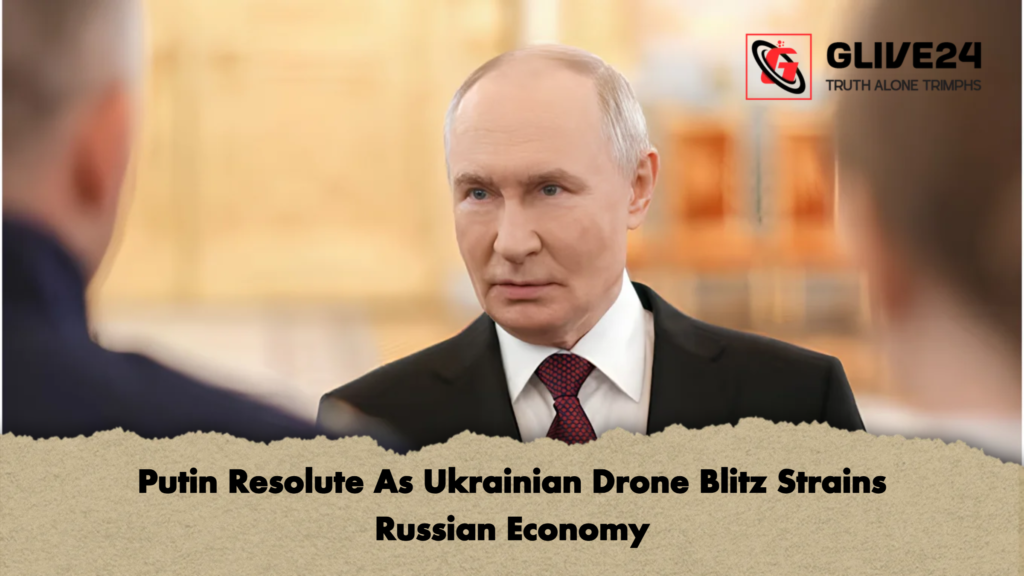
The Russia-Ukraine conflict has entered its fifth year, taking a dramatic turn as Kyiv intensifies operations designed to force Moscow to the negotiating table. Ukraine has initiated a targeted 40-day campaign, unleashing a wave of precision drone strikes against strategic assets deep inside Russian territory. While the Kremlin faces mounting domestic pressure, Russian President Vladimir Putin remains completely unyielding. He has rejected a proposal for direct talks with Ukrainian President Volodymyr Zelenskyy, vowing instead to consolidate military strength and press ahead with the offensive.
A Mirror Strategy Induces Domestic Chaos
In the initial phases of the war, Russia systematically targeted Ukraine’s energy infrastructure, power grids, and heating plants to cripple civilian morale. Kyiv has now adopted a mirrored strategy. Rather than engaging solely in grinding attrition along the front lines, Ukrainian forces are hitting Russia’s economic heartlands. Specially targeted sites include oil refineries, maritime vessels, military factories, and satellite communication hubs.
This tactical shift has brought the realities of the war directly to the Russian populace. For the first time, unprecedented queues have formed at petrol stations across Russia, leaving citizens waiting for hours. In occupied Crimea, fuel sales have been suspended entirely, and a state of emergency has been declared across the peninsula.
Initially dismissive of the drone threat, Putin has publicly acknowledged the burgeoning fuel crisis. During a recent emergency meeting with senior officials, he admitted that national fuel reserves have plummeted to uncomfortable levels. A specialised task force has been assembled, and Moscow is actively considering a total ban on diesel exports to protect its vulnerable agricultural sector from severe disruption.
Ukraine’s Growing Industrial Autonomy
Ukraine’s capacity to execute these deep-penetration strikes stems from a radical transformation in its military-industrial complex. Previously reliant almost entirely on Western arms shipments, Kyiv has rapidly built a massive domestic drone manufacturing sector, now producing an estimated six to seven million uncrewed aerial vehicles annually. This self-reliance allows Ukraine to bypass front-line stalemates and project psychological and strategic power thousands of miles away.
Kyiv’s recent successes have altered international perceptions. US President Donald Trump, who had previously expressed frustration with the Ukrainian leadership, has lauded Zelenskyy’s resilience. Concurrently, NATO has reaffirmed its commitment to standing firmly behind Ukraine. Bolstered by this support, Zelenskyy expressed confidence that proper international backing could soon force Moscow to accept a fair peace settlement.
The Kremlin’s Unbroken Shield
Despite these setbacks, seasoned analysts argue that external pressure is unlikely to break Putin’s resolve. Marking a quarter-century at the helm of Russian politics, Putin maintains absolute control over the military and state administration, leaving virtually no room for internal dissent.
To counter punishing Western sanctions, the Kremlin has successfully established alternative trade routes and economic partnerships with China, India, and Iran. Crucially, Moscow views its vast nuclear arsenal as an ultimate shield, calculating that Western powers will avoid actions that risk escalating the conflict into a direct, global confrontation. Consequently, whilst the war has gained a volatile new momentum, a definitive end to the hostilities remains out of sight.