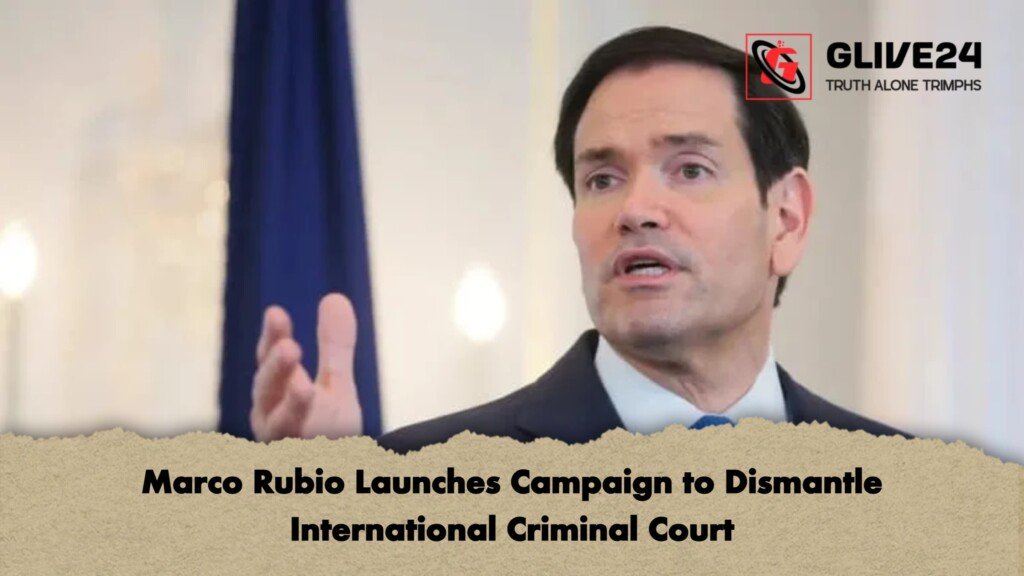
US Secretary of State Marco Rubio has launched an aggressive campaign aimed at dismantling the International Criminal Court (ICC). He alleges that the tribunal’s actions interfere directly with the operations of the United States military and law enforcement agencies, posing an unacceptable risk to American national sovereignty.
In a lengthy op-ed published in the Wall Street Journal, Rubio detailed a scenario where US border patrol agents and elected officials could be hauled before the international court, forced to face trial under foreign judges. He doubled down on these concerns in a video message posted on X, warning that inaction would leave American citizens at the mercy of foreign jurists thousands of miles away. Rubio argued that individuals could face prosecution and imprisonment simply for performing their duties to protect the nation.
According to a report by CNN, the State Department plans to exert significant pressure on other nations to withdraw from the court entirely. A US official speaking to the network indicated that countries relying on American aid could face intense scrutiny if they refuse to reject the ICC’s claimed authority. The administration is reportedly considering punitive measures against uncooperative nations, including economic sanctions, travel restrictions, and the cancellation of visas.
Legal experts have quickly pushed back against the administration’s rhetoric, calling Rubio’s characterisation of the court’s powers highly misleading. Kenneth Roth, the former executive director of Human Rights Watch, pointed out that the ICC does not claim jurisdiction over actions committed on US soil. He argued that Rubio is using national sovereignty as a shield to secure impunity for potential American war crimes, while ignoring the sovereign right of other states to seek justice for crimes committed within their own borders.
Based in The Hague, Netherlands, the ICC was established in 2002 under the Rome Statute to investigate and prosecute the world’s worst crimes. The court can only investigate offences committed within member states that have ratified the treaty. The United States has never ratified the Rome Statute and remains outside its jurisdiction. Consequently, the ICC has not initiated any investigations into activities on US territory.
Legal analysts suggest the administration’s real objective is to shield US personnel operating on the territory of countries that have accepted ICC jurisdiction. Washington’s stance on the court appears highly selective. For instance, the US administration warmly welcomed the ICC’s investigation into alleged Russian war crimes in Ukraine, which is a member of the court. However, the tone shifted dramatically when the office of ICC Chief Prosecutor Karim Khan launched a probe into Israeli actions in Palestine. Since Palestine is an ICC member, the court exercised its valid jurisdiction, eventually issuing arrest warrants for Israeli Prime Minister Benjamin Netanyahu and former Defence Minister Yoav Gallant.
In response to the actions against Israel, Donald Trump declared a “national emergency” via an executive order, accusing the ICC of targeting the US and its close ally with unlawful and baseless actions. This declaration triggered sanctions against several court officials, including Chief Prosecutor Karim Khan, two deputy prosecutors, and six judges. These measures were later expanded to target Francesca Albanese, the UN Special Rapporteur on human rights in the occupied Palestinian territories, along with three Palestinian human rights organisations involved in gathering evidence of war crimes.
Whether Rubio’s diplomatic offensive will successfully dismantle the international court remains to be seen, but it marks a significant escalation in Washington’s hostility towards global judicial institutions.