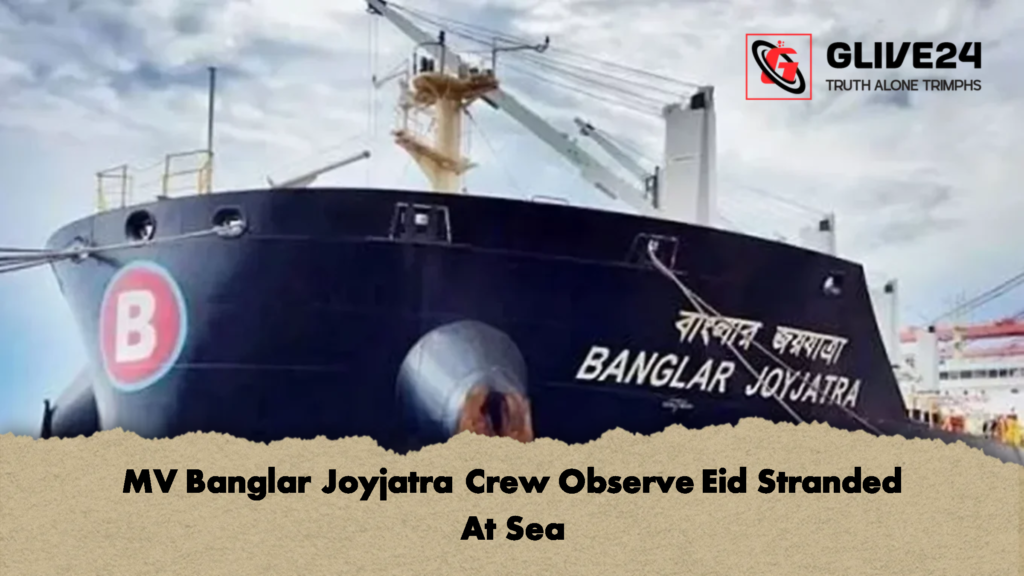
Thirty-one Bangladeshi seafarers aboard the state-owned, Bangladesh-flagged vessel, MV Banglar Joyjatra, have observed the religious festival of Eid-ul-Azha while remaining stranded in the Strait of Hormuz. The vessel has been immobilised for approximately three months due to the ongoing military conflict in the Middle East. Despite making three separate attempts to navigate out of the high-risk zone and cross the strategic Strait of Hormuz, the merchant ship has been repeatedly forced to abort its passage owing to volatile maritime safety conditions.
The commercial bulk carrier is owned and operated by the Bangladesh Shipping Corporation (BSC), a state-run autonomous body under the Ministry of Shipping. All 31 crew members deployed aboard the vessel are Bangladeshi nationals.
Consecutive Festivities Spent Under Maritime Isolation
This marks the second consecutive major religious festival that the crew members have spent confined to the vessel. The seafaring personnel previously observed Eid-ul-Fitr at sea, and on Wednesday, they observed Eid-ul-Azha afloat amidst escalating regional geopolitics. The convergence of an active war zone and prolonged isolation has subjected the crew to a distressing environment characterised by severe psychological anxiety.
| Vessel Operational Parameter | Verified Status and Log Details |
| Vessel Name | MV Banglar Joyjatra |
| Ownership Registry | Bangladesh Shipping Corporation (BSC) |
| Total Crew Complement | 31 Personnel (All Bangladeshi Nationals) |
| Current Location | Strait of Hormuz, Middle East |
| Duration of Confinement | Approximately 3 Months |
| Navigation Status | 3 Attempted Crossings Aborted |
| Logistical Provisions | Adequate Food and Fresh Water Supplies |
Shipboard communications indicate that whilst the physical provisions of food and drinking water remain completely adequate for the immediate future, the psychological toll on the crew is mounting. The seafarers are experiencing prolonged mental trauma stemming from the constant vulnerability to missile strikes and loitering munitions (drones) operating in the airspace directly above their coordinates. Furthermore, because the vessel is restricted from docking, the crew has been entirely denied shore leave, exacerbating their sense of confinement.
Official Administrative Assessment and Technical Response
In contrast to the statements regarding psychological stress, the executive management of the Bangladesh Shipping Corporation has maintained that the operational and health status of the crew remains stable. The corporation’s leadership emphasised that comprehensive protocols are in place to support the personnel during this enforced anchorage.
The Managing Director of the Bangladesh Shipping Corporation, Commodore M Mahmudul Malek, provided an official assessment of the situation, reasonably downplaying the uniqueness of the hardship whilst affirming the state’s ongoing efforts to secure the vessel’s release.
Commodore M Mahmudul Malek: “Remaining at anchorage or floating at sea for extended durations is not an unfamiliar professional experience for seasoned merchant mariners. According to our official logs, all seafarers on board are maintaining a normal daily routine and remain in good health. We have proactively enhanced their on-board facilities, allowances, and general amenities to alleviate the circumstances. Our primary administrative focus is centred on executing a safe and secure passage to bring the vessel and its crew back to sovereign waters, and maximum diplomatic and logistical efforts are being deployed to achieve this outcome.”
The BSC has further clarified that it is monitoring the regional security architecture in communication with international maritime authorities. Safe passage through the chokepoint requires precise timing to avoid active crossfire, which explains why the vessel has been instructed to hold its position rather than risk a fourth unauthorised transit. The corporation continues to coordinate with global shipping registers to ensure the bulk carrier’s hull, cargo, and human complement remain protected until a secure naval corridor becomes available.