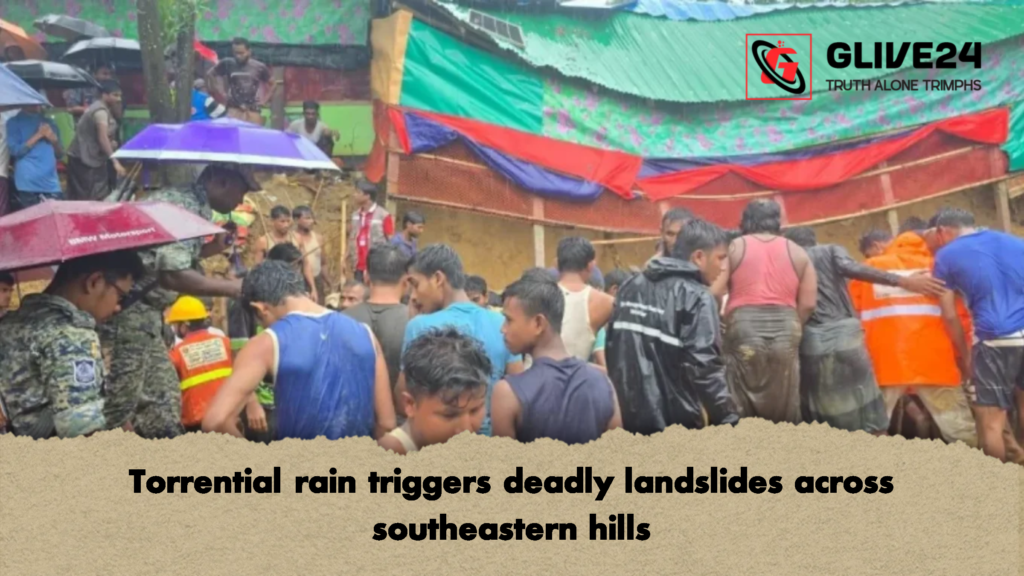
Thirty individuals have lost their lives following a relentless spell of torrential rainfall that triggered catastrophic landslides and widespread flash flooding across Chittagong, the Chittagong Hill Tracts, and Cox’s Bazar. The grim assessment was delivered on Thursday, 9 July, by the Minister for Disaster Management and Relief, Asadul Habib Dulu, during an emergency parliamentary session. Presenting a formal statement under Rule 300 of the Rules of Procedure in the National Parliament, the minister detailed the human toll and outlined the government’s unfolding humanitarian response.
The prolonged downpour saturated the fragile hillsides of the southeastern coastal and mountainous belts, causing massive walls of mud to collapse onto residential settlements tucked at the foothills. The minister provided a regional breakdown of the fatalities, revealing that Cox’s Bazar bore the absolute brunt of the disaster with 19 confirmed deaths. Elsewhere, landslide incidents claimed five lives in Chittagong district, another five in remote parts of Bandarban, and one life in Rangamati.
Massive emergency shelter network activated
Large swathes of territory remain entirely submerged, cutting off remote villages and displacing thousands of families. In response to the escalating humanitarian crisis, the Ministry of Disaster Management and Relief has activated an extensive network of emergency shelters across five vulnerable southeastern districts to accommodate the influx of displaced residents.
| District | Emergency Shelters Opened | Fatalities Recorded |
| Cox’s Bazar | 640 | 19 |
| Chittagong | 411 | 5 |
| Bandarban | 220 | 5 |
| Khagrachhari | 135 | 0 |
| Rangamati | 21 | 1 |
To ensure the survival and dignity of the affected populations, the government has outfitted these facilities with essential supplies. Clean drinking water resources and emergency food rations have been distributed across the centres to prevent the outbreak of waterborne illnesses. The distribution of relief materials is being handled in two distinct phases, with local administrative teams managing the logistics on the ground.
Prime minister assumes operational oversight
The administration has placed a strong emphasis on preventative measures to stop further casualties as weather warnings persist. Local administrative bodies, accompanied by volunteer units, are utilising megaphones to broadcast urgent evacuation warnings in high-risk foothill areas. Residents living on precarious slopes are being strongly urged to leave their homes and seek immediate safety in nearby government facilities.
During his address, Minister Asadul Habib Dulu emphasised that the Prime Minister is personally supervising the situation on a 24-hour basis, providing direct instructions to field officials. To bolster regional emergency funds, the Prime Minister’s Relief Fund has separately released an immediate allocation of 2 million BDT to each affected district. The minister assured Parliament that additional emergency funds would be disbursed immediately if the weather conditions continue to deteriorate.
National Contingency Funding: To ensure readiness beyond the immediate crisis zone, the central government has preemptively dispatched 100 tonnes of emergency rice supplies and 200,000 BDT in cash to every single district administration across Bangladesh to handle any potential spillover disasters.
The session concluded with the minister issuing a direct plea to all Members of Parliament, urging them to return to their respective constituencies to raise public awareness. He stressed that institutional intervention alone cannot solve the crisis, and that community-led awareness is vital to convincing families to abandon high-risk hillside dwellings before more lives are needlessly lost to the monsoonal deluges.