
Professor Mijanur Rahman, University of Dhaka
Published: 30th June 2026, 5:07 PM
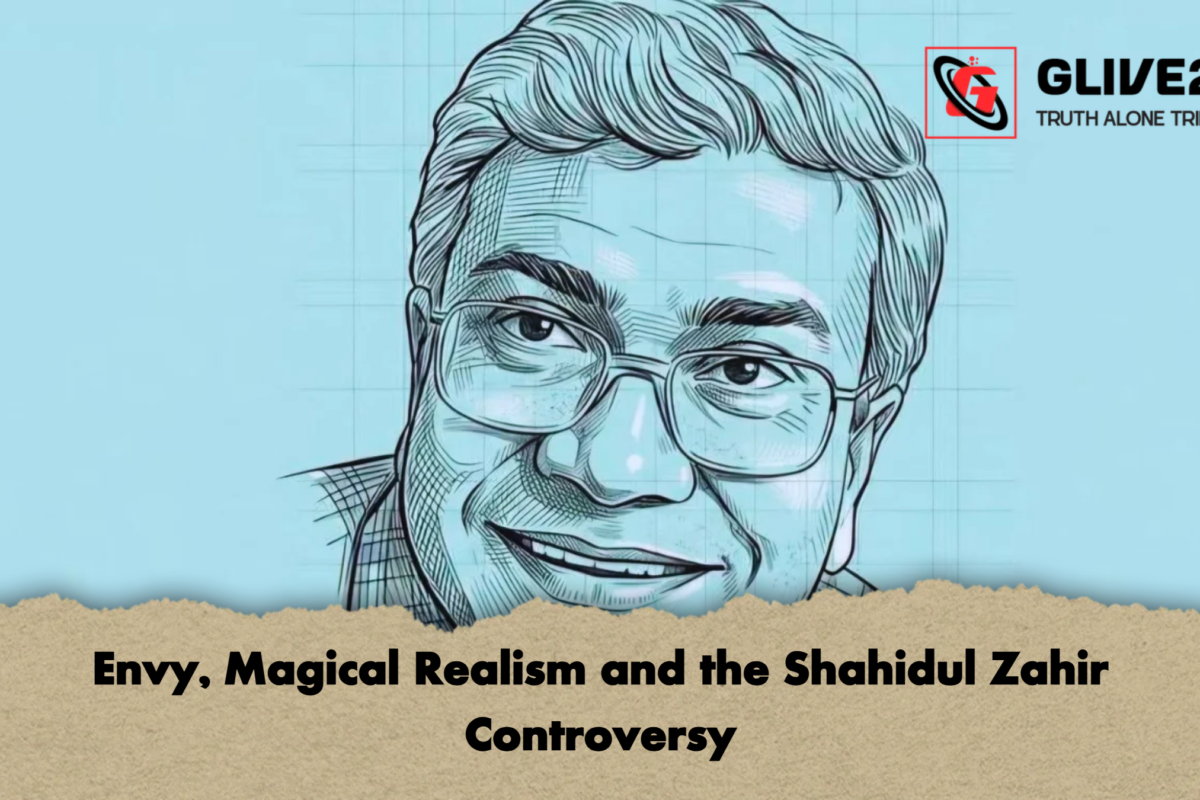
A fierce debate has erupted across the cultural and social media landscapes of Bangladesh following a controversial interview by a highly prominent intellectual. In the interview, the academic dismissed the late, critically acclaimed fiction writer Shahidul Jadir as not even a “third-class author”. While digital spaces have erupted with defensive reactions and superficial trolling, a deeper analysis reveals that this confrontation is not merely an isolated critique. According to Professor Mizanur Rahman of the University of Dhaka, looking at this dispute through the psychological frameworks of Sigmund Freud, Jacques Lacan, and the legendary Bangladeshi thinker Ahmad Sofa exposes a primitive, subconscious manifestation of intellectual envy.
Ironically, Jadir spent his career dissecting this exact trait—collective malice and begrudging envy—within the Bengali psyche. In his masterpiece novel, Se Rate Purnima Chhilo (There Was a Full Moon That Night), the protagonist Mofizuddin accumulates extraordinary fortune and grace. Instead of celebrating him, the inhabitants of Suhaspur village construct a suffocating fog of whispers, slander, and malicious rumours. Jadir demonstrated that when a community cannot tolerate someone else’s linguistic sovereignty, intellect, or passion, it resorts to collective hostility to drag that successful individual down. The contemporary attempt to relegate Jadir to a “third-class” status feels like a page torn directly from his own fiction, manifesting in real life.
The psychopathology of the Bengali intellect, particularly within the Bengali Muslim bourgeoisie, was most ruthlessly analysed by Ahmad Sofa. In his seminal essay, Bangali Musalmaner Mon (The Mind of the Bengali Muslim), Sofa observed:
“The Bengali Muslim society is self-centred. Its eyes do not look outward; instead, they turn inward, circling and dying within themselves. The people of this society do not find joy in grand creations, but they derive a distorted pleasure from the downfall of others. Because they cannot grow big themselves, a pervasive desire drives this society to pull down anyone else who rises.”
When a viral public intellectual summarily dismisses a reclusive, profoundly original stylist like Jadir, Sofa’s words in Buddhibrittir Nuton Binyas (The New Alignment of Intellect) ring uncomfortably true. Sofa argued that many local intellectuals operate on opportunism and malice. Unable to uncover new truths themselves, they lack the capacity to tolerate anyone else uttering an authentic truth or producing a genuinely creative piece of work.
This friction can be further understood through the Freudian concept of the “narcissism of small differences”. When two entities occupy a similar intellectual space—such as dealing with French critical theory, subaltern history, and European philosophy—an unconscious urge arises to attack the other to protect one’s own perceived supremacy. As Jadir captivates readers with his magical realist prose, his sheer creative sovereignty threatens the ego of the institutional academic. According to Freud’s theory of projection, when an individual cannot consciously accept their own creative limitations—such as a lack of truly original literary output—they soothe their ego by labelling the peer’s superior creativity as “third-class”.
Similarly, the French psychoanalyst Jacques Lacan asserted that human desire is always mediated by the desire of the other. The envious intellectual is not distressed by the peer’s material success, but rather by their jouissance—the intense, unquantifiable creative pleasure they experience. Jadir’s labyrinthine prose and aesthetic liberation pose a direct psychological challenge to the rigid, citation-heavy, institutional language of academic elites. By enforcing a total foreclosure on Jadir, these critics attempt to seize control of “The Gaze of the Big Other”, positioning themselves as the ultimate arbiters of literary merit.
Just as a twisted, temporary relief washed over the villagers after Mofizuddin’s tragedy in Jadir’s novel, certain intellectuals and their loyal followers seek a similarly muddy satisfaction by lashing out at Jadir. In Lacanian terms, these citation-heavy figures cast themselves as the epistemic father, embodying “The-Name-of-the-Father” for their disciples. When this authoritative figure issues a decree, the followers adopt the patriarchal law as absolute truth, experiencing Schadenfreude in the collective dismissal of a master storyteller.
Ultimately, Sofa’s tragic verdict remains irrefutable: the great tragedy of the Bengali character is its inability to appreciate the living genius, choosing instead to celebrate them only after they are gone. No amount of theoretical decrees can erase Jadir’s spellbinding prose from the minds of his readers. His literature endures, illuminated entirely by its own intrinsic brilliance.
Professor Mijanur Rahman, University of Dhaka




Comments