
Khabor Wala Desk
Published: 30th June 2026, 10:23 PM
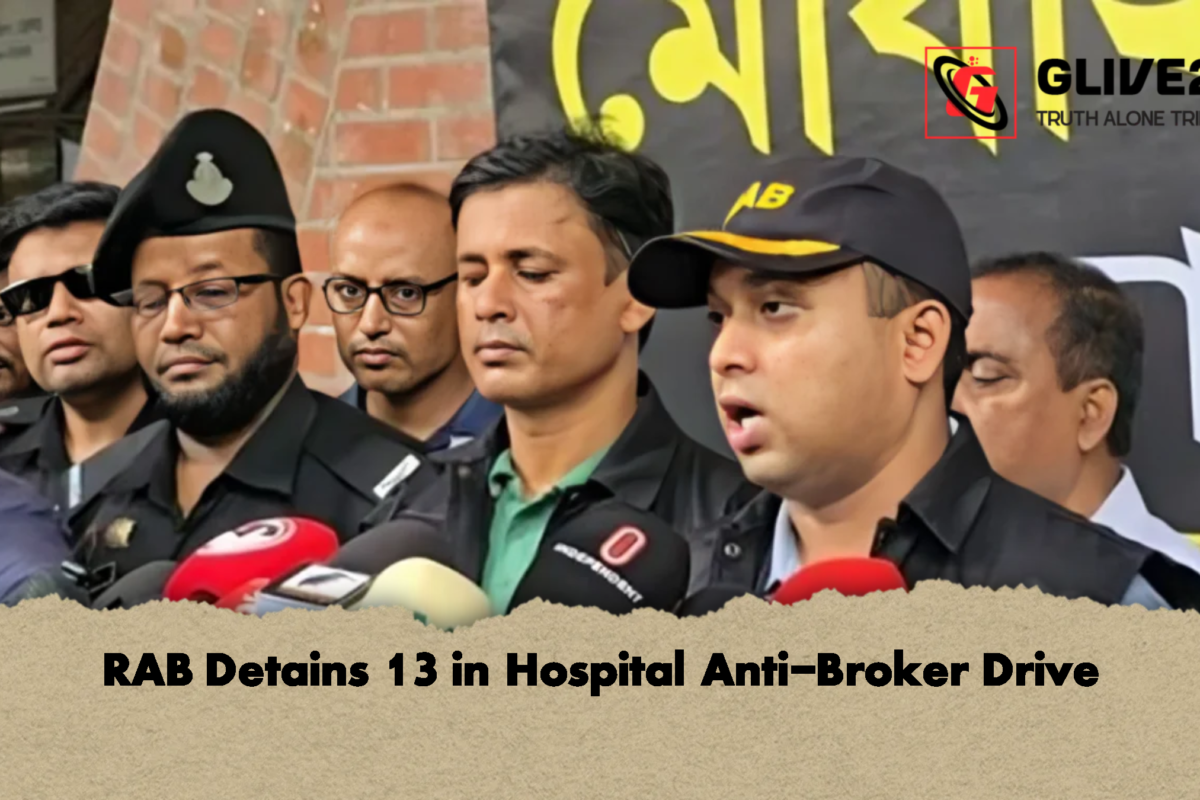
A mobile court operated by the Rapid Action Battalion (RAB) has detained 13 suspected hospital brokers, including a woman, during coordinated anti-broker operations at three major government hospitals in the capital. The drive forms part of an ongoing effort to curb illegal brokerage activities that authorities say routinely exploit patients and their families seeking treatment.
The operation was carried out on Monday by a team from RAB-2 at Shaheed Suhrawardy Medical College Hospital, the National Institute of Cardiovascular Diseases and Hospital, and the National Institute of Traumatology and Orthopaedic Rehabilitation (NITOR), commonly known as the Pangu Hospital, all located in Dhaka’s Sher-e-Bangla Nagar area.
Speaking at a press briefing immediately after the operation, RAB-2 Deputy Commander Squadron Leader Nifaz Rahman said intelligence information had indicated the presence of an organised group of brokers who were causing significant hardship for patients by taking advantage of their unfamiliarity with hospital procedures.
He said the primary objectives of the operation were to identify and detain members of these broker networks, ensure immediate legal action through a mobile court, raise public awareness about such activities and help create a transparent, patient-friendly environment within public healthcare institutions.
According to RAB, the operation was conducted on the basis of confidential intelligence, with law enforcement personnel and a mobile court simultaneously carrying out inspections at the three hospitals. During the raids, 13 suspected brokers, including one woman, were detained.
The detainees were handed over to the Executive Magistrate attached to the mobile court, who will determine the legal measures to be taken against them under the relevant laws.
Illegal brokerage has long been recognised as a persistent problem in many government hospitals across Bangladesh. Individuals operating as brokers are often accused of approaching patients and their relatives at hospital entrances, outpatient departments and emergency units, offering to expedite medical consultations, diagnostic tests, hospital admissions or access to specialised services in exchange for money.
Authorities have repeatedly warned that such practices not only impose unnecessary financial burdens on patients but can also undermine confidence in the public healthcare system by encouraging irregularities and misinformation.
Officials say anti-broker drives are conducted periodically to discourage these activities, although concerns remain that such networks often re-emerge unless sustained monitoring and institutional reforms are maintained.
Commenting on the latest operation, Acting Director of Shaheed Suhrawardy Medical College Hospital, Dr Nanda Dulal Saha, said the hospital administration had extended full cooperation to the law enforcement agencies during the drive.
He acknowledged that periodic operations by RAB had helped hospital authorities manage the longstanding problem more effectively.
“These anti-broker operations have made our work easier from time to time,” he told journalists, adding that the hospital administration supports initiatives aimed at ensuring that patients receive services without interference from unauthorised intermediaries.
When asked whether any hospital employees had been found to be involved in brokerage activities, Dr Saha said the administration had not found evidence implicating permanent government staff.
He noted, however, that action had previously been taken against outsourced personnel after allegations of involvement in similar activities were substantiated. According to him, those individuals had been removed from their jobs.
Authorities have not disclosed the identities of the 13 detainees or specified the penalties they may face following the mobile court proceedings.
The latest operation reflects continuing efforts by law enforcement agencies and hospital authorities to improve accountability in public health facilities. Officials say such campaigns are intended not only to punish offenders but also to reassure patients that government hospitals remain committed to providing services free from unlawful influence and exploitation.
The three hospitals targeted in the operation are among Bangladesh’s busiest public healthcare institutions, serving thousands of patients every day. As a result, authorities say maintaining an orderly and transparent environment is essential to ensuring that medical services are delivered fairly and efficiently to those in need.


Comments