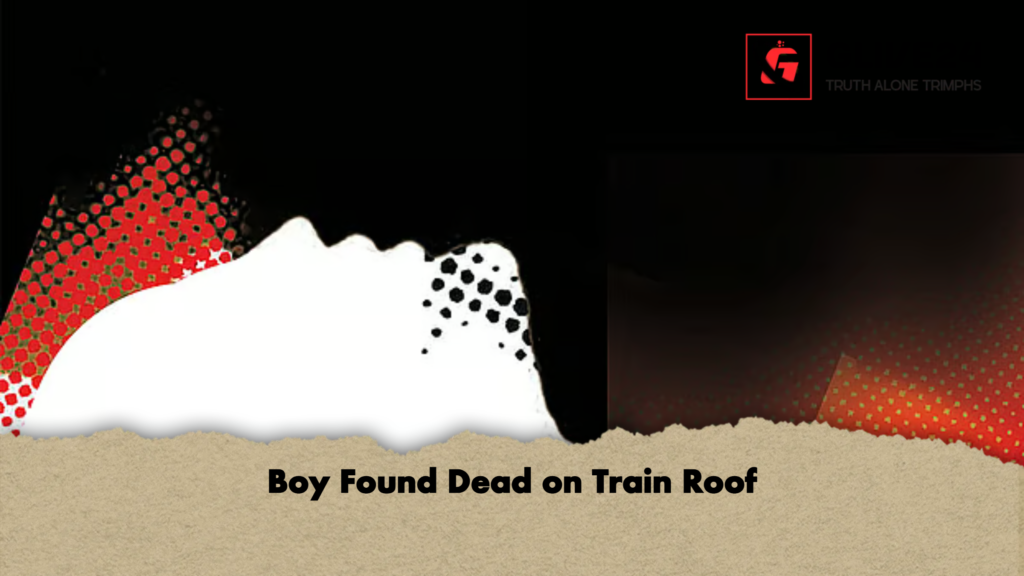
An 11-year-old boy was found dead on the roof of the Rajshahi-bound Dhumketu Express after the train arrived at Ishwardi Bypass Railway Station in Pabna, prompting railway police to launch an investigation into the circumstances surrounding the tragedy.
The incident came to light at around 11:30 a.m. on Tuesday, when passengers noticed the bloodstained body lying on the roof of the train shortly after it stopped at the station. They immediately alerted station authorities, who informed the railway police. Officers subsequently recovered the body and began the necessary legal procedures while opening a formal investigation.
The deceased was identified as Nirab Hossain, 11, the son of the late Bhiru Mia from Kulagati village in Dhunat Upazila of Bogura District. According to the initial examination, the child had sustained a severe head injury. Investigators are now working to determine how he climbed onto the roof of the train and under what circumstances he lost his life.
Witnesses said several passengers attempted to access the roof after the train reached Ishwardi Bypass Station. It was then that they discovered the motionless child lying in a pool of blood and quickly informed railway officials. Police arrived soon afterwards, recovered the body, and initiated an inquiry.
Officer-in-Charge Ziaur Rahman of Ishwardi Railway Junction Police Station said the victim had a clearly visible head injury. Investigators currently suspect that the fatal injury may have occurred when the train was in motion and the boy’s head struck a railway bridge or another overhead structure along the route. He stressed, however, that this remains only a preliminary assessment. The exact cause of death will be established after the post-mortem examination and the completion of the investigation.
Police were able to confirm the child’s identity through a mobile phone found in his pocket. His family members were subsequently contacted and informed of the incident. The body will be handed over to the relatives after all legal formalities, including the post-mortem examination, have been completed.
Railway police said the investigation is being treated with due importance. Officers are trying to establish where the child boarded the train, whether he was travelling alone or accompanied by someone else, and whether any passengers or railway staff saw him on the roof during the journey. These lines of inquiry are expected to play a key role in reconstructing the sequence of events.
Travelling on the roof of moving trains remains one of the most dangerous forms of unauthorised travel in Bangladesh. People occupying train roofs face a constant risk of colliding with bridges, signal gantries and other overhead structures. Such journeys can also expose passengers to additional hazards along the railway network, making them particularly vulnerable to fatal accidents.
Railway authorities and safety experts have repeatedly urged passengers to avoid travelling on train roofs and have called for stronger enforcement measures alongside greater public awareness to discourage the practice. Officials have consistently warned that even a momentary lapse in judgement can have irreversible consequences.
The death of the young boy has cast a pall of grief over his family and local community. Investigators say a clearer picture of what happened will emerge once forensic findings and witness statements have been examined, after which the precise cause and circumstances of the child’s death will be officially determined.