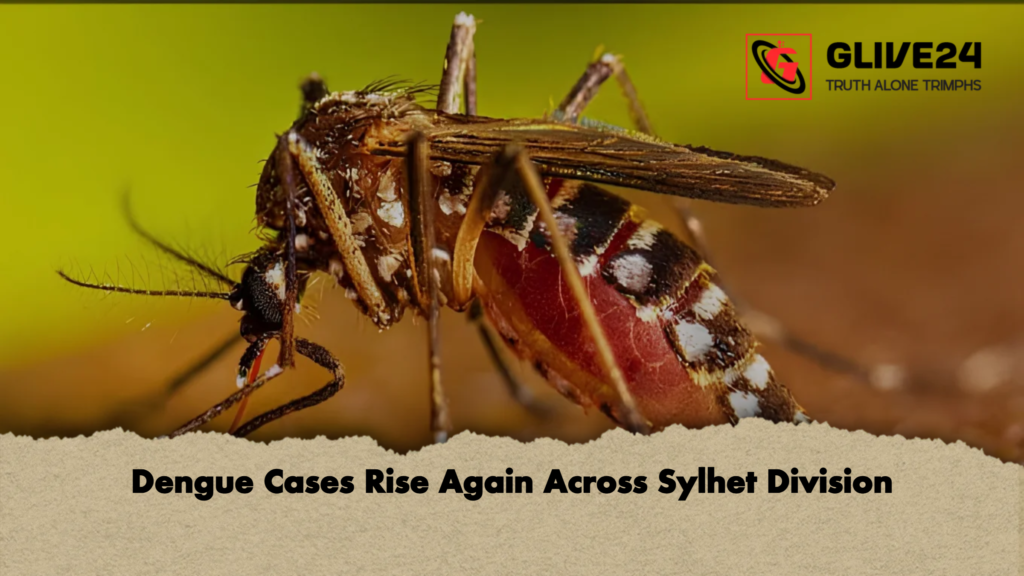
Dengue infections are once again on the rise in Bangladesh’s Sylhet Division, with health authorities reporting two new cases over the past 24 hours. The latest figures have pushed the total number of confirmed dengue infections in the division to 73 since the beginning of the year, prompting renewed calls for vigilance as the monsoon season creates favourable conditions for mosquito breeding.
The update was confirmed on Thursday (9 July) by Dr Mahbubul Alam, Divisional Director of Health for Sylhet. He warned that the arrival of the rainy season significantly increases the risk of the spread of dengue, making preventive measures more important than ever.
According to the divisional health authorities, 73 dengue patients have been identified across Sylhet Division between 1 January and 9 July. At present, eight patients are receiving treatment at hospitals and healthcare facilities throughout the region.
Hospital records show that two patients are being treated at Sylhet MAG Osmani Medical College Hospital. One patient each has been admitted to Mount Adora Hospital, North East Medical College Hospital, Habiganj 250-Bed District Sadar Hospital, Moulvibazar 250-Bed District Sadar Hospital, Madhabpur Upazila Health Complex and Lakhai Upazila Health Complex.
District-wise statistics indicate that Habiganj has recorded the highest number of dengue infections this year, with 34 confirmed cases. Sunamganj has reported 15 cases, while Sylhet district has recorded 13 and Moulvibazar eight. Health officials also identified three patients who had travelled from outside the division, with one case each linked to Brahmanbaria, Netrokona and Barishal districts.
Although the overall number of infections remains comparatively modest, public health officials are closely monitoring the situation because dengue transmission typically accelerates during the monsoon months. Rainwater collecting in open containers, discarded tyres, flower pots, rooftop corners and construction sites provides ideal breeding grounds for Aedes mosquitoes, the primary carriers of the virus.
Dr Mahbubul Alam said the two newly confirmed cases over the past day underline the need for continued public awareness. He urged residents to remove stagnant water from their homes and surrounding areas, maintain proper sanitation and seek medical attention promptly if symptoms such as high fever, severe headache, muscle pain or skin rashes develop.
Health experts continue to stress that preventing mosquito breeding remains the most effective defence against dengue. They believe that coordinated efforts by local authorities, healthcare workers and the public will be essential to limiting further transmission during the peak rainy season.