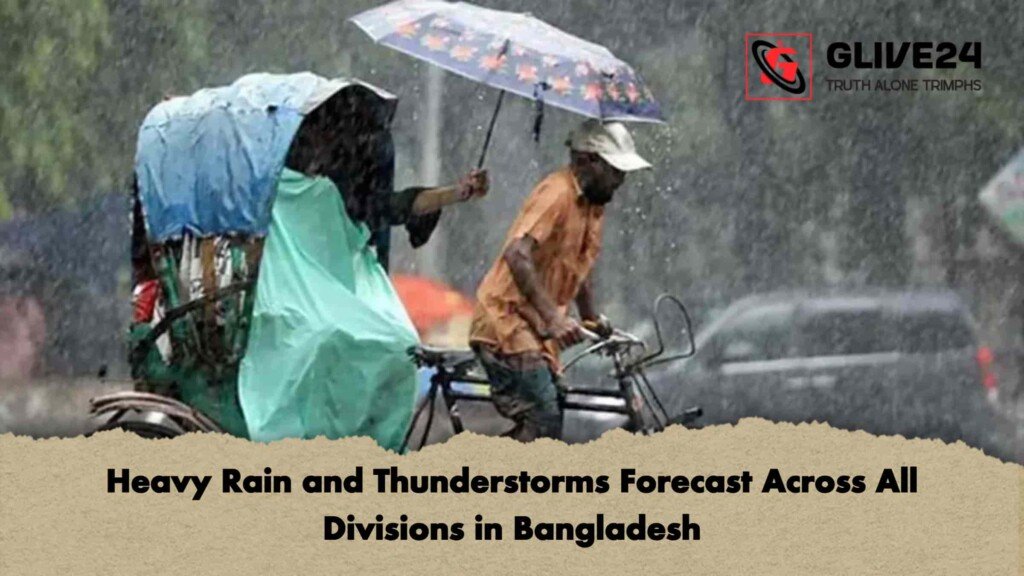
The Bangladesh Meteorological Department (BMD) has issued a comprehensive weather alert warning of widespread light to moderate rainfall, accompanied by gusty winds and thunderstorms, across all administrative divisions of the country over the next five days. According to senior meteorologists, a steep pressure gradient over the North Bay of Bengal, coupled with an active monsoon over Bangladesh, is driving this intense weather system. Consequently, several regions are expected to experience torrential downpours, leading to concerns over localized flooding and disruptions to daily life.
The official forecast, released by BMD meteorologist A.K.M. Nazmul Hoque on Saturday, 11 July, highlights that the adverse weather conditions will peak during the first half of the week before gradually subsiding. Given Bangladesh’s vulnerability to monsoon-induced inundation, particularly in low-lying urban areas and river basins, authorities are monitoring the situation closely.
Phase-by-Phase Monsoon Progression
The weather office has detailed a day-by-day progression of the monsoon’s activity, indicating high precipitation levels initially, followed by a slight rise in temperatures as the system begins to weaken towards the middle of July.
-
Saturday, 11 July to Sunday, 12 July: Over the initial 24-hour period, most places across the eight divisions—namely Rangpur, Rajshahi, Mymensingh, Dhaka, Khulna, Barisal, Chittagong, and Sylhet—will witness temporary gusty winds and lightning alongside light to moderate rain. Heavier spells are anticipated in isolated areas, whilst day and night temperatures are expected to remain relatively unchanged.
-
Sunday, 12 July to Monday, 13 July: The status quo is predicted to persist into Sunday morning. The majority of regions across all eight divisions remain on high alert for moderate to exceptionally heavy rainfall. Ambient temperatures will hold steady across the country.
-
Monday, 13 July to Tuesday, 14 July: A minor shift in distribution will begin on Monday. While the majority of areas in Rangpur, Rajshahi, Mymensingh, Dhaka, Khulna, and Sylhet will continue to see widespread rain, precipitation will become slightly more scattered in the Chittagong and Barisal divisions. However, the threat of isolated heavy downpours remains nationwide.
-
Tuesday, 14 July to Wednesday, 15 July: By Tuesday morning, widespread rainfall will be concentrated across Rangpur, Rajshahi, Mymensingh, Dhaka, Barisal, and Khulna, whereas many places in Chittagong and Sylhet will experience intermittent showers. Daytime temperatures are forecast to rise marginally, whilst nocturnal temperatures will remain stable.
-
Wednesday, 15 July to Thursday, 16 July: The intensity of the monsoon is projected to wane by mid-week. Rainfall will become more sporadic, affecting many areas in Rajshahi, Mymensingh, Dhaka, Chittagong, and Sylhet, but only a few places in Rangpur, Barisal, and Khulna. Both day and night temperatures are expected to see a slight increase.
The Meteorological Department concluded its bulletin by noting that overall precipitation levels across Bangladesh are anticipated to decrease noticeably after the expiry of this five-day period.
Contextual Impact and Precautionary Measures
Meteorological Context: The South Asian summer monsoon, which typically spans from June to September, is crucial for Bangladesh’s agricultural sector but frequently brings challenges such as urban waterlogging and landslides in hilly terrains like Chittagong and Sylhet. A steep pressure gradient over the Bay of Bengal intensifies wind speeds and accelerates moisture transport inland, precipitating severe cloudbursts.
Residents in major metropolitan areas, particularly Dhaka and Chittagong, are advised to prepare for potential waterlogging on major thoroughfares, which routinely disrupts commuter traffic during heavy monsoon spells. Furthermore, seafaring boats and fishing trawlers operating in the North Bay have been counselled to exercise caution due to the turbulent sea conditions generated by the steep pressure gradient. Local administrations in landslide-prone hilly districts have also been alerted to monitor vulnerable slopes as the heavy rainfall progresses.