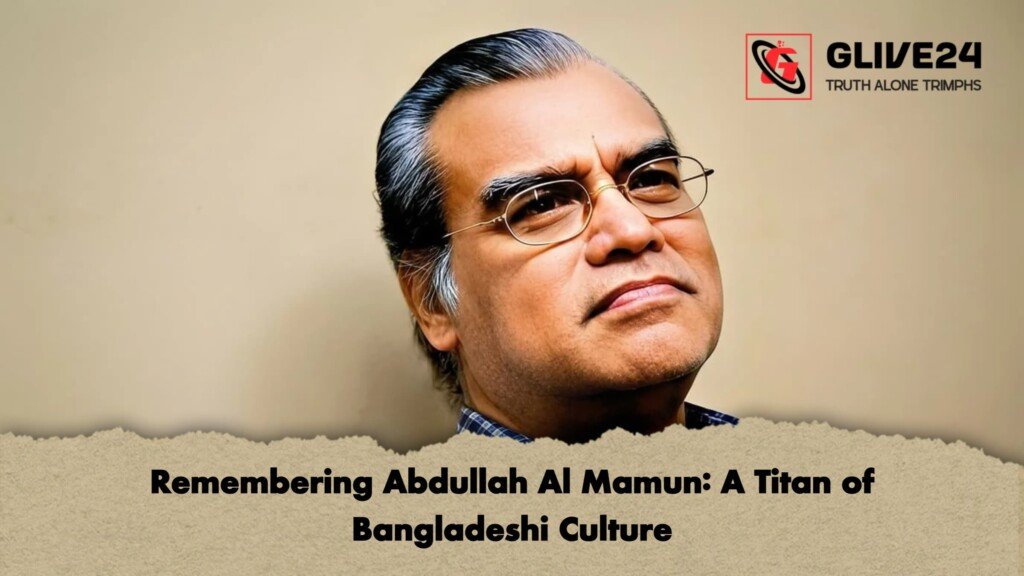
The history of Bangladeshi theatre, television, and cinema remains incomplete without the definitive contributions of Abdullah Al Mamun. A multi-faceted genius, Mamun was a playwright, director, actor, producer, and cultural organiser who reshaped the nation’s artistic landscape. Through his socially conscious lens and brilliant craftsmanship, he elevated Bengali drama to unprecedented heights, introducing a modern aesthetic language to Bangladesh Television (BTV) during its formative years.
Born on 13 July 1942 in Jamalpur, Mamun developed a profound passion for literature and the arts during his childhood. After completing his Master’s degree in History from the University of Dhaka in 1964, he joined BTV as a producer in 1966. This marked the beginning of an illustrious career that spanned over four decades. He was instrumental in shaping the golden era of Bangladeshi television, introducing nuanced characterisation and contemporary social themes to the small screen. His administrative capabilities later led him to serve as the Director of BTV’s Film and Video Unit, and subsequently, as the Director General of the Bangladesh Shilpakala Academy.
As a dramatist, Mamun’s writing remains deeply relevant. His acclaimed plays include Subachan Nirbasane, Ekhon Dusshomoy, Senapati, Ekhono Kritodas, Kokilara, Desher Manush, Meraj Fakirer Ma, and Meherjan Arekbar. These works masterfully addressed social realities, political turbulence, class struggles, and human values. His magnum opus, however, was the iconic television drama serial Sangsaptak, adapted from Shahidullah Kaiser’s celebrated novel. Decades after its initial broadcast, Sangsaptak remains a benchmark of broadcasting excellence in South Asia.
Mamun was equally influential in mainstream cinema. He directed critically acclaimed films such as Sareng Bou, Sokhi Tumi Kar, Dui Jibon, Bihanga, and Podma Parer Douloti, all of which successfully balanced commercial appeal with artistic integrity. His cinematic narratives frequently captured the resilience of the human spirit amidst societal oppression. As an actor, his performances in Amjad Hossain’s landmark films Golapi Ekhon Traine and Ekhoni Somoy earned him widespread public admiration. Over his lifetime, he produced and directed more than a hundred television dramas, including notable titles like Shirshabindu, Jibon Chhobi, Ghorowa, Uttaradhikar, Ek Jonome, and Joar-Bhata.
In recognition of his monumental contributions to arts and letters, Mamun received the Ekushey Padak—one of the highest civilian awards in Bangladesh—alongside the Bangla Academy Literary Award, the National Film Award, the National Television Award, and the Munier Chowdhury Honour from Theatre. The visionary creator passed away on 21 August 2008 at the age of 65. Though he is no longer present, his intellectual legacy, artistic philosophy, and timeless creations continue to inspire successive generations of filmmakers and dramatists across the country.