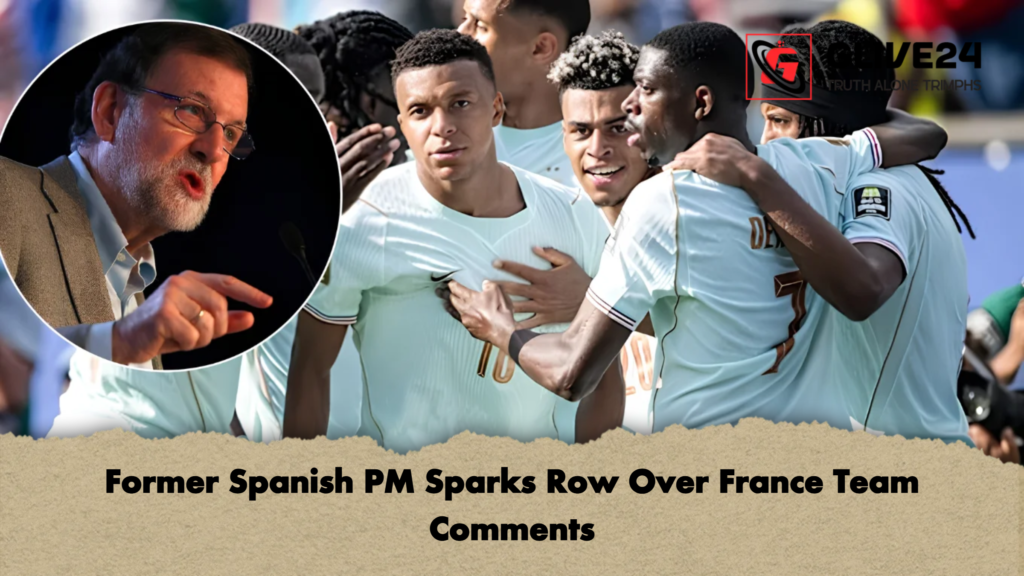
A political controversy has erupted ahead of the highly anticipated World Cup semi-final between Spain and France after former Spanish Prime Minister Mariano Rajoy made comments about the composition of the French national team, triggering strong criticism in both countries.
Rajoy, who served as Spain’s prime minister from 2011 to 2018, addressed France’s squad in an opinion article published in the Spanish newspaper . In his piece, he acknowledged that France had a team filled with world-class players and praised their impressive performances. However, he also claimed that there were “no French players” in the squad, despite the team’s success on the international stage.
The remarks quickly drew widespread criticism, with several French political figures accusing Rajoy of promoting a divisive and discriminatory view of national identity. Critics argued that a player’s nationality should be defined by citizenship and their commitment to representing the country, rather than by their family background or ancestry.
French Interior Minister Laurent Nuñez criticised Rajoy’s statement during an interview with BFM TV on Sunday, describing the comments as unacceptable. He stressed that France’s diversity is one of the country’s greatest strengths and that people from different backgrounds have the opportunity to contribute to society and achieve success.
France’s national football team has long reflected the country’s multicultural character. Players with roots in different regions of the world have played key roles in the team’s achievements, including France’s World Cup victories in 1998 and 2018. Supporters of the team have frequently highlighted that its strength comes from unity and the ability of players from diverse backgrounds to compete together under the French flag.
The controversy also spread to Spain, where Rajoy faced criticism from government officials. Spanish Transport Minister Óscar Puente strongly criticised the former prime minister’s remarks, saying that such comments were not consistent with the responsibilities expected from a senior political figure. He also questioned Rajoy’s image as a moderate politician.
Spain’s current Prime Minister Pedro Sánchez also entered the debate. In a post on social media platform X, Sánchez criticised the idea of judging a person’s nationality based on their surname, birthplace or physical appearance. He said that true identity should be measured by a person’s commitment, affection and contribution to their country. He described Rajoy’s remarks as reflecting a form of xenophobic thinking.
The dispute has added an unexpected political dimension to the sporting rivalry between Spain and France. While both teams prepare for their crucial semi-final encounter, the debate surrounding identity and representation has become a major talking point away from the pitch.
The match itself is expected to attract global attention, with two of Europe’s strongest football nations competing for a place in the World Cup final. However, the controversy surrounding Rajoy’s remarks has ensured that the encounter will be discussed not only for its footballing significance but also for the wider social issues it has brought into focus.