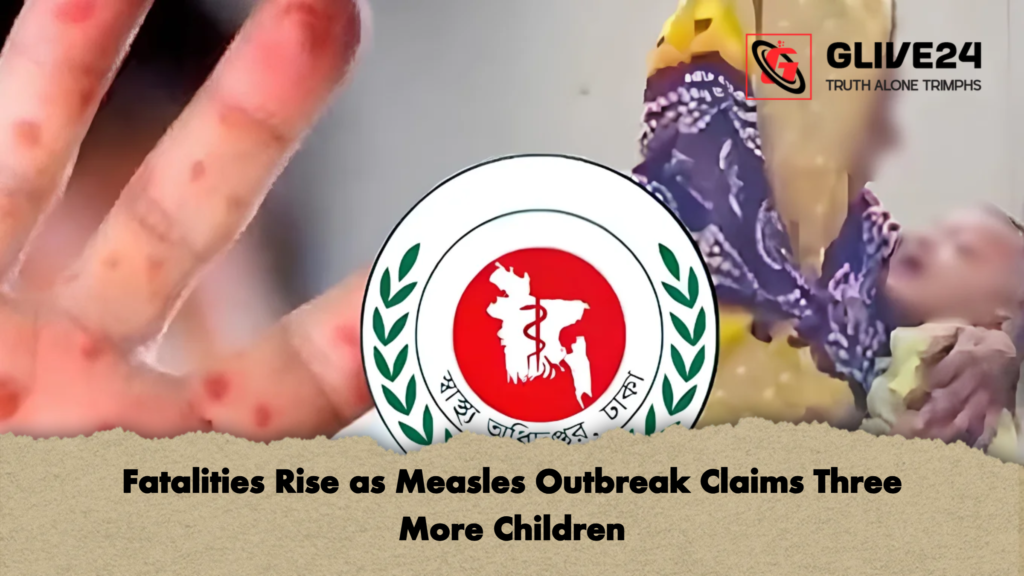
A persistent measles outbreak in Bangladesh has claimed the lives of three more children suffering from related symptoms within the last 24 hours. Official data released by the Directorate General of Health Services (DGHS) on Saturday, 11 July 2026, also revealed that 786 new patients were admitted to hospitals across the country with measles and measles-like symptoms during the same period.
The latest figures highlight a growing public health crisis that has been escalating since the middle of March. According to the daily epidemiological report compiled by the DGHS, the total death toll from the disease has now climbed to 753. Within this total, 660 children died after exhibiting classic measles symptoms, whilst 93 fatalities were laboratory-confirmed cases of measles.
Hospital resources are facing immense strain. Since the formal tracking of this current wave began on 15 March, a total of 93,491 individuals—overwhelmingly young children—have been hospitalised nationwide due to the highly contagious viral infection. Medical facilities have managed to treat and discharge 89,762 patients who successfully recovered. However, thousands remain under medical supervision, and the daily influx of more than 700 new cases indicates that transmission remains high.
Public health experts express concern over the structural vulnerabilities exposed by this outbreak. Measles is entirely preventable through timely vaccination, usually administered via the Measles-Rubella (MR) vaccine under the government’s expanded programme on immunisation. Outbreaks of this magnitude typically point to critical gaps in routine immunisation coverage, particularly in remote rural areas, urban slums, and displaced communities where families face barriers to healthcare access.
The clinical progression of the disease poses severe risks to malnourished or partially immunised children. Beyond the initial high fever, cough, runny nose, and characteristic skin rash, measles severely suppresses the immune system. This leaves young patients highly susceptible to fatal secondary complications such as severe diarrhoea, acute encephalitis, and blindness. The DGHS has instructed regional civil surgeons and upazila health complexes to intensify localized vaccination campaigns and ensure isolation wards are adequately equipped to handle the surge. Government healthcare workers are urged to raise awareness, advising parents to seek immediate clinical assistance if a child develops a persistent rash alongside a high fever.