Khabor Wala Desk
Published: 3rd June 2026, 8:31 PM
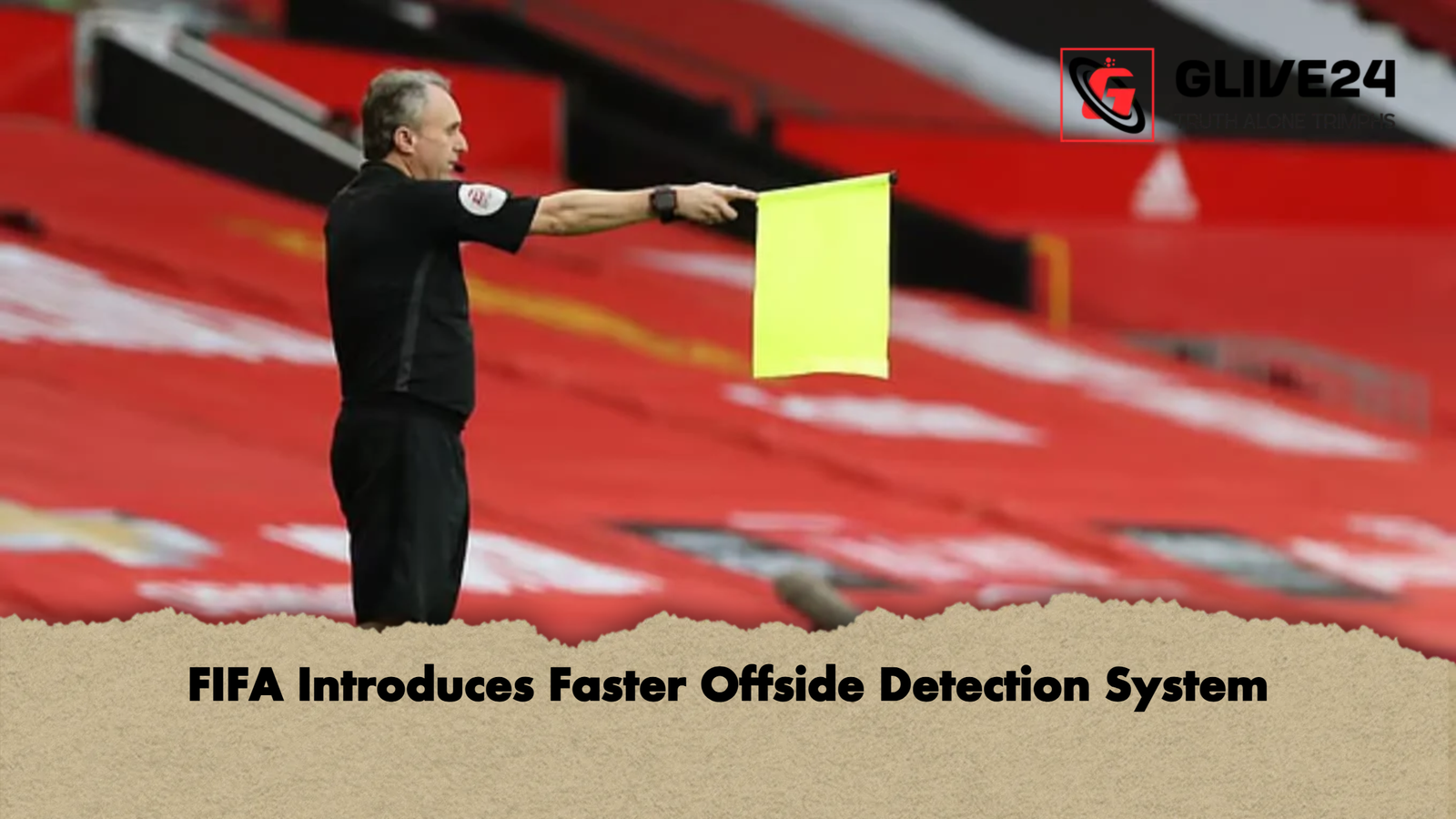
FIFA is set to introduce an enhanced semi-automated offside technology at the upcoming World Cup, a move aimed at reducing delays in offside decisions and allowing assistant referees to raise their flags more promptly when clear infringements occur.
Under the new system, assistant referees will receive an immediate audio alert whenever a player is more than 10 centimetres offside. The technology is designed to support Video Assistant Referees (VAR) and accelerate the decision-making process during matches.
Previous versions of the system were tested during the FIFA Club World Cup and the Intercontinental Cup. In those trials, match officials received alerts only when a player was more than 50 centimetres offside. FIFA has now significantly reduced that threshold to improve the speed of detection and communication.
Despite the introduction of real-time alerts, the final decision on whether to stop play or raise the offside flag will remain with the on-field officials. Referees and assistant referees will retain full authority and may choose not to act on an alert if they suspect a technical issue or believe further assessment is necessary. FIFA has stated that several safeguards have been incorporated into the system to minimise the risk of errors.
According to reports by the BBC, the technology is not intended to identify the most marginal offside situations. It also has limitations when players are lying on the pitch or when several players are positioned very close together. In such circumstances, human judgement will continue to play a decisive role.
The system is designed solely to determine a player’s position on the field. More interpretative aspects of the offside law, such as whether a player has interfered with an opponent without touching the ball, will continue to be assessed by the referee.
FIFA believes the technology could reduce frustration among players and supporters by providing quicker decisions. It may also help lower the risk of injuries caused by play continuing unnecessarily before an offside offence is recognised.
One incident frequently cited in discussions about delayed offside flags occurred in May 2025, when Nottingham Forest striker Taiwo Awoniyi collided with a goalpost and subsequently fell into a coma after an assistant referee delayed raising the offside flag during a match.
| Feature | Details |
|---|---|
| Technology Type | Enhanced semi-automated offside technology |
| Alert Threshold | More than 10 cm offside |
| Previous Trial Threshold | More than 50 cm offside |
| Alert Method | Real-time audio signal to assistant referees |
| Final Authority | On-field referee and assistant referee |
| Primary Purpose | Faster offside identification and decision-making |
FIFA has also confirmed that every player participating in the tournament will receive an artificial intelligence-generated three-dimensional digital avatar. With 48 teams expected to take part and each squad comprising 26 players, a total of 1,248 players will be digitally scanned.
The scanning process will take place in a dedicated chamber and require only one second per player. It will be conducted once during the official pre-tournament photo session. The resulting digital models will allow offside decisions to be displayed through more detailed and accurate animations on television broadcasts and stadium giant screens.
In addition, FIFA has approved the use of technology capable of determining precisely whether the ball had fully crossed the field boundary before a goal-scoring move. The decision follows controversy surrounding a disallowed Aston Villa goal against Brentford in February, when it was unclear to the naked eye whether the ball had gone out of play.
Under the new system, a three-dimensional animation similar to goal-line technology visualisations will be used to show the ball’s exact position. Furthermore, a sensor embedded inside the ball will identify which player last touched it. This information will provide VAR officials with additional evidence when reviewing decisions, including whether corner kicks have been awarded correctly.
Together, these technological developments represent FIFA’s latest effort to improve the speed, clarity and accuracy of officiating at the World Cup while maintaining the referee’s ultimate authority over decisions on the field.




Comments