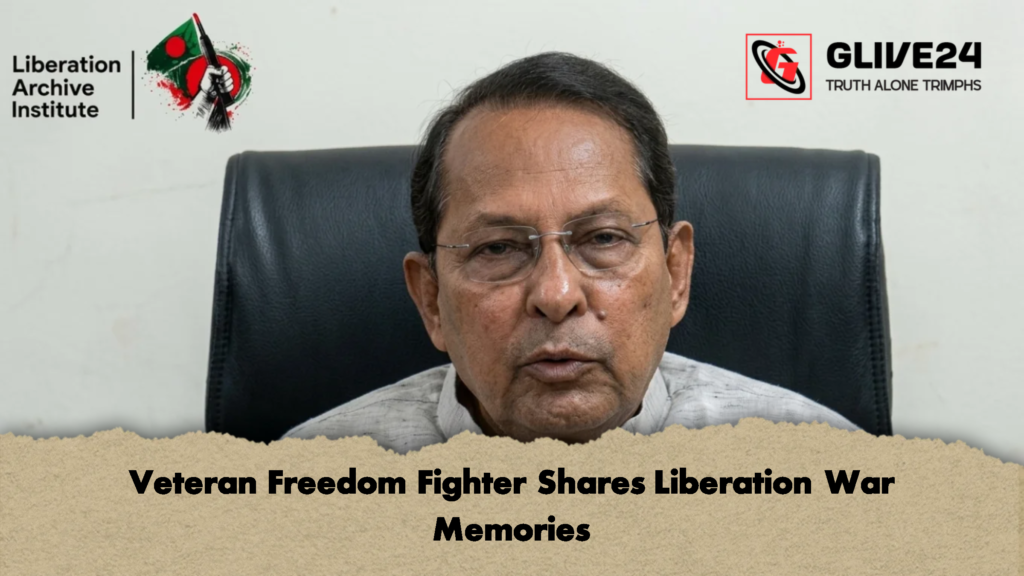
The story of Bangladesh’s Liberation War is not merely a chapter in history; it is the foundation upon which the nation’s identity was forged. The nine-month struggle for independence in 1971 was shaped by extraordinary courage, sacrifice and resilience, as millions of people endured immense hardship in pursuit of freedom. Among those who witnessed and actively participated in that defining period is veteran freedom fighter and politician Hasanul Haq Inu.
Widely known as the president of the Jatiya Samajtantrik Dal (JASAD) and a prominent left-wing political figure in Bangladesh, Inu has remained an influential presence in the country’s political landscape for decades. Long before entering mainstream politics, however, he earned recognition as a freedom fighter whose contribution forms part of the broader history of Bangladesh’s War of Independence.
Following the military crackdown launched by the Pakistani occupation forces in March 1971, which triggered widespread violence and mass atrocities across the country, Inu joined the Liberation War. During the conflict, he served in several capacities, including as an organiser, trainer and frontline combatant, taking part in the armed resistance that ultimately led to Bangladesh’s independence.
Like countless other freedom fighters, he experienced the uncertainty, hardship and danger that characterised the war. Each day brought fresh challenges, from organising resistance and conducting guerrilla operations to surviving under constant threat. The determination of those who fought, together with the support of ordinary citizens, became a driving force behind Bangladesh’s eventual victory in December 1971.
In this interview, Hasanul Haq Inu reflects on those defining months through the perspective of someone who lived the conflict firsthand. His recollections explore the preparations for war, the training of fighters, the realities of guerrilla operations and the sacrifices made by fellow freedom fighters who risked or gave their lives in pursuit of independence.
His account also highlights the vital contribution of ordinary people, whose shelter, food, intelligence and moral support often proved indispensable to the success of resistance operations. The interview illustrates how the Liberation War extended beyond the battlefield, becoming a collective national struggle involving people from all walks of life.
Rather than presenting history solely through official records or written documents, the interview offers a rare first-person narrative that helps bring the events of 1971 to life. Such oral testimonies provide valuable historical insight by preserving personal experiences that complement archival sources and academic research.
Historians and researchers have long regarded firsthand accounts as an essential part of documenting the Liberation War. Individual memories, while personal in nature, contribute to a broader understanding of how the conflict unfolded across different regions and communities. They also help future generations appreciate the human dimension of a struggle that transformed the political destiny of the Bengali people.
The interview explores not only military aspects of the war but also the ideals that inspired those who joined the fight. Themes of patriotism, sacrifice, solidarity and the aspiration for a democratic and independent Bangladesh run throughout Inu’s reflections, offering readers a deeper appreciation of the values that motivated thousands of freedom fighters.
As Bangladesh continues to preserve and document the history of its Liberation War, interviews with surviving participants have assumed growing importance. With the passage of time, opportunities to record firsthand memories are becoming increasingly limited, making such conversations valuable historical resources for researchers, educators and future generations alike.
The experiences shared by Hasanul Haq Inu serve as more than a personal memoir. They form part of Bangladesh’s collective historical record, preserving the voices of those who stood on the front lines during one of the nation’s most defining chapters.
As long as the history of the Liberation War continues to be remembered, the testimonies of those who fought for independence will remain an integral part of Bangladesh’s national consciousness. Their memories stand not only as a tribute to past sacrifice but also as a lasting source of inspiration for generations to come.
Acknowledgement: Bangladesh Liberation Struggle and Liberation War Research Centre Trust, Chattogram.
Interview conducted by: Razia Sultana Dipa and Alamgir Rumi.