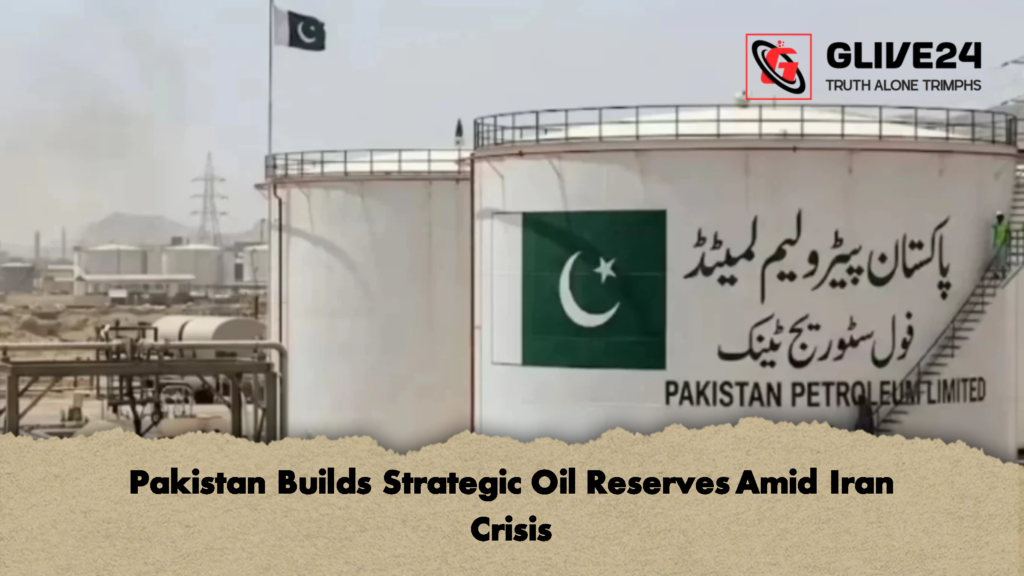
The ongoing three-month-long diplomatic and military crisis involving Iran has exposed severe vulnerabilities within the energy sector of Pakistan. In an effort to mitigate these structural weaknesses and safeguard against future geopolitical disruptions, the Government of Pakistan has initiated a plan to establish its first-ever strategic petroleum reserves.
Government Documents Reveal Feasibility Studies
According to a comprehensive report published on Monday, 1 June, by the Japan-based news outlet Nikkei Asia, the Petroleum Division under the Ministry of Energy of Pakistan has officially floated a tender to conduct a feasibility study for the development of strategic oil reserves. Official state documentation indicates that recent volatility in global energy markets and heightening uncertainties in international supply chains have compelled the South Asian nation to recognise the critical necessity for long-term fuel security arrangements.
Currently, Pakistan relies extensively on foreign energy resources to sustain its domestic infrastructure. Approximately 90 per cent of the country’s imported crude oil and liquefied natural gas (LNG) is transported directly through the Strait of Hormuz—a narrow maritime chokepoint heavily impacted by the prevailing regional tensions. Despite this high level of vulnerability, Pakistan currently possesses zero government-controlled strategic petroleum reserves designated for emergency utilisation. To rectify this exposure, the state plans to engineer an integrated framework combining newly constructed state repositories, mandatory industrial inventory requirements, and commercially managed bonded storage facilities.
Collaborative Partnerships and Infrastructure Locations
Official state sources indicate that Islamabad is actively engaged in bilateral consultations with several key international partners to assess the viability of establishing bonded oil terminals within Pakistani territory. The foreign governments and state entities involved in these preliminary discussions include:
-
The Kingdom of Saudi Arabia
-
The State of Kuwait
-
The State of Qatar
-
The United Arab Emirates
-
The People’s Republic of China
The coastal city of Gwadar, which features a strategic deep-water port, has been identified by officials as a prime prospective location for these large-scale storage installations. Under the proposed operational guidelines, the fuel stored within these secure regional terminals can be requisitioned and redirected by the government to satisfy domestic energy demands in the event of an international crisis or complete supply disruption.
Target Capacities and Financial Frameworks
The initial phase of the strategic roadmap aims to construct a petroleum reserve capacity capable of sustaining national consumption for a duration of 45 days. The long-term objective is to systematically expand this capacity to encompass a 90-day supply of petroleum products. This long-term goal aligns precisely with the official recommendations issued by the International Energy Agency (IEA), which mandates that net oil-importing economies must maintain emergency reserves equivalent to at least 90 days of their average daily net imports.
However, independent energy analysts have raised caveats regarding the execution of this model. Industry experts emphasise that for a bonded storage system to function reliably as an authentic strategic reserve, the state must implement unambiguous statutory regulations. These frameworks must clearly define the protocols for emergency inventory release, internal pricing methodologies, transparent data disclosure rules, and strict supply allocation priorities. Without these precise legal mechanisms, analysts warn that the infrastructure may degenerate into standard commercial warehouses rather than serving as a national security asset.
Financing this monumental infrastructure program presents a significant economic hurdle for the debt-laden nation. The government is currently evaluating a fiscal proposal to create a dedicated investment fund by levying a specific tariff of 10 Pakistani Rupees per litre on existing domestic petroleum sales. Energy economists estimate that accumulating an initial one-month supply of crude oil reserves will require an upfront capital investment of approximately 1 billion US dollars. To alleviate this direct pressure on the national exchequer, the state is actively seeking to incorporate private sector capital and public-private partnerships into the project’s financial architecture.
Concurrently, alternative technology experts argue that the administration should balance its focus on fossil fuel preservation by dedicating equivalent capital investments toward renewable energy infrastructure, grid-scale battery storage capabilities, and the acceleration of electric vehicle transport networks to permanently reduce the country’s structural dependence on imported oil.