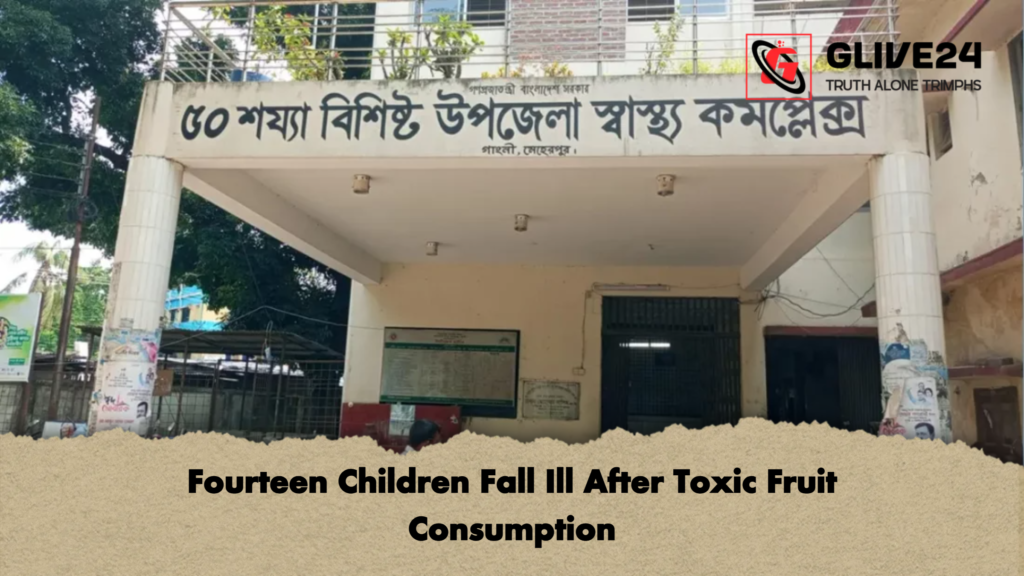
Fourteen children have fallen ill in Meherpur’s Gangni upazila after mistakenly consuming a poisonous fruit they believed to be almonds, prompting emergency medical treatment and hospitalisation.
The incident occurred on Sunday afternoon in Saharbaty village when the children were playing in a field, as they regularly do after school. While playing near a roadside area, they came across fruit from a tree they assumed to be edible almonds. Attracted by its mild sweetness, they consumed several pieces before returning home.
Medical and local sources later identified the fruit as belonging to the Barbados nut plant, locally known as “jiala”, which is not safe for human consumption. Despite appearing harmless and slightly sweet in taste, the fruit contains naturally occurring toxic compounds that can trigger gastrointestinal distress.
Symptoms began to appear in the evening after the children returned home. Several of them complained of severe abdominal pain, followed by vomiting and general weakness. Alarmed family members quickly realised that many of the children who had been playing together were experiencing similar symptoms and rushed them to Gangni Upazila Health Complex and nearby medical facilities.
Of the fourteen affected children, nine were admitted to hospital for observation and treatment, while the remaining five received initial care and were discharged under medical supervision. Those hospitalised include children aged between three and twelve, among them Moshtakin (12), Kafi (12), Amena Khatun (3), Halima (9), Raktima (11), Riad (11), Ferdous (10), Fuad (12), and Mostakim (9).
A mother of one of the children, Rozina Khatun, said her son suddenly began crying in pain after returning home in the evening. She added that panic spread quickly when other children from the same group reported similar discomfort.
Medical officials stated that ingestion of Barbados nut fruit or leaves can cause symptoms such as abdominal pain, vomiting, and diarrhoea, particularly in children. They confirmed that prompt medical attention helped stabilise the patients, and all admitted children are currently out of danger, though continued observation may still be required.
Dr Omar Faruq, a medical officer at Gangni Upazila Health Complex, said the children were initially kept under close monitoring and treated according to their symptoms. He noted that their conditions have improved significantly.
Locals have expressed concern over the lack of awareness among children regarding wild plants and inedible fruits. Many believe that better community awareness and early identification of toxic plants in residential areas could help prevent similar incidents in the future.