
Khabor Wala Desk
Published: 30th June 2026, 3:56 PM
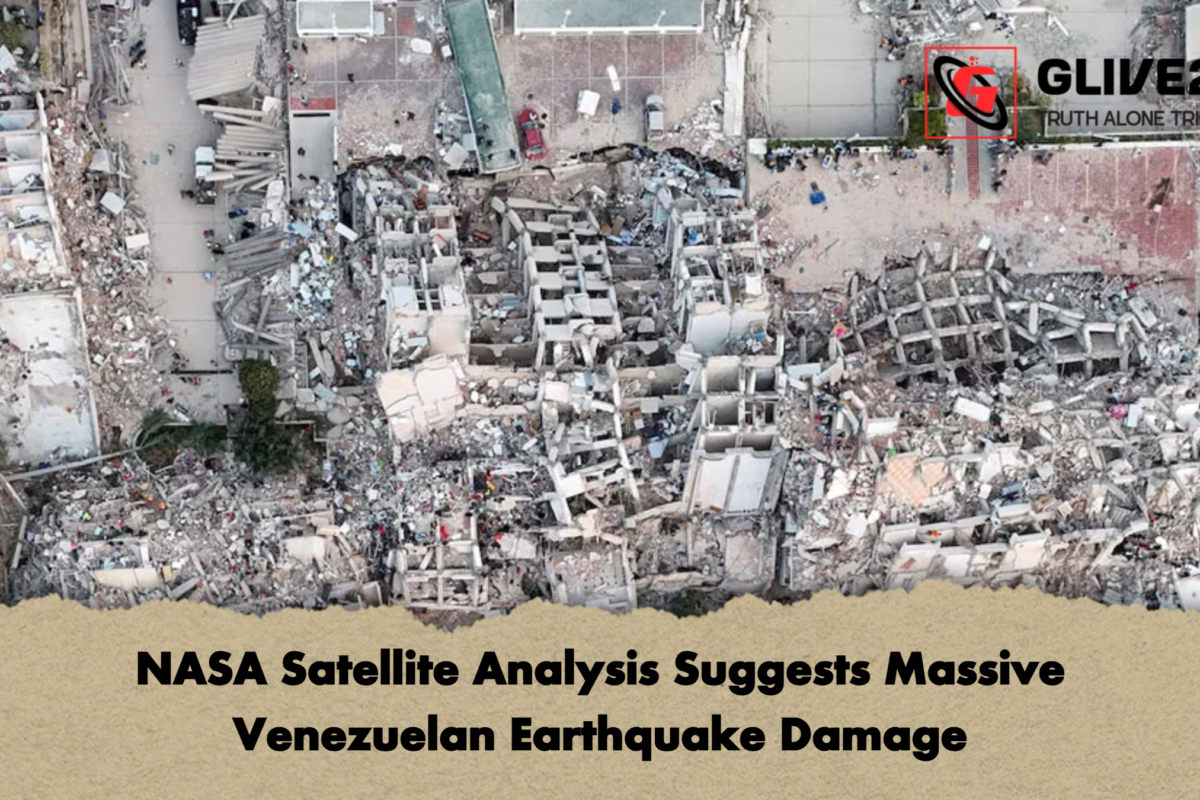
More than 58,000 buildings across Venezuela may have been damaged or destroyed following two powerful earthquakes that struck the country last week, according to a preliminary satellite-based assessment by the United States National Aeronautics and Space Administration (NASA). Researchers stressed that the findings are an early estimate based on remotely sensed data and will require confirmation through detailed field investigations.
The twin earthquakes, measuring 7.2 and 7.5 on the Richter scale, triggered widespread destruction across large parts of the country. Rescue teams have so far recovered at least 1,700 bodies, while thousands of people remain missing. Officials fear the death toll could rise significantly as emergency crews continue to search collapsed buildings and isolated communities.
Seismologists have described the disaster as one of the most powerful earthquakes to strike Venezuela in more than a century. The intense shaking severely affected residential neighbourhoods, public buildings, educational institutions and other essential infrastructure. Damage to roads, bridges and communication networks has complicated rescue operations and delayed efforts to establish the full scale of the disaster, particularly in remote areas.
Researchers Corey Scher and Jamon Van Den Hoek of Oregon State University analysed satellite radar data collected on 25 June to produce an initial assessment of the affected region. Their study estimates that approximately 58,870 buildings may have suffered partial or complete damage. They emphasised that the figure represents a scientific estimate rather than a confirmed count of destroyed structures.
The assessment relied on high-resolution radar imagery captured by the European Space Agency’s Sentinel-1 satellite. By comparing radar observations recorded before and after the earthquakes, researchers identified changes in the Earth’s surface and structural patterns that may indicate building damage. This form of satellite analysis has become an increasingly valuable tool in the immediate aftermath of major natural disasters, especially when damaged transport links or hazardous conditions prevent rapid access for emergency assessment teams.
Despite the scale of the estimate, the researchers cautioned against treating the figure as definitive. Satellite observations can identify likely areas of damage but cannot fully determine the structural condition of every building without inspections on the ground. Engineering surveys and local verification will be needed before the total extent of destruction can be confirmed.
Official figures released by the Venezuelan government remain considerably lower. National Assembly President Jorge Rodríguez said authorities have so far verified damage to 855 buildings, including 189 that have completely collapsed. Disaster specialists say such differences between official reports and satellite-based estimates are not unusual during the early stages of a large-scale emergency. Initial government assessments often rely on accessible locations, while satellite imagery can indicate potential damage across much wider regions, including areas that rescue teams have not yet reached.
NASA said its satellites continue to monitor the affected areas and collect updated imagery and data. The information is being shared with emergency responders to help identify the hardest-hit locations, prioritise search and rescue operations, and support the planning of humanitarian relief efforts. As recovery progresses, the satellite analysis is also expected to contribute to long-term decisions on reconstruction, infrastructure rehabilitation and disaster resilience planning.
The latest assessment underscores both the devastating human impact of the earthquakes and the growing role of space-based technology in supporting emergency response. While the final damage figures will depend on comprehensive field investigations, the satellite analysis provides an important early picture of the scale of destruction facing Venezuela as rescue and recovery operations continue.



Comments