Khabor Wala Desk
Published: 9th June 2026, 7:45 PM
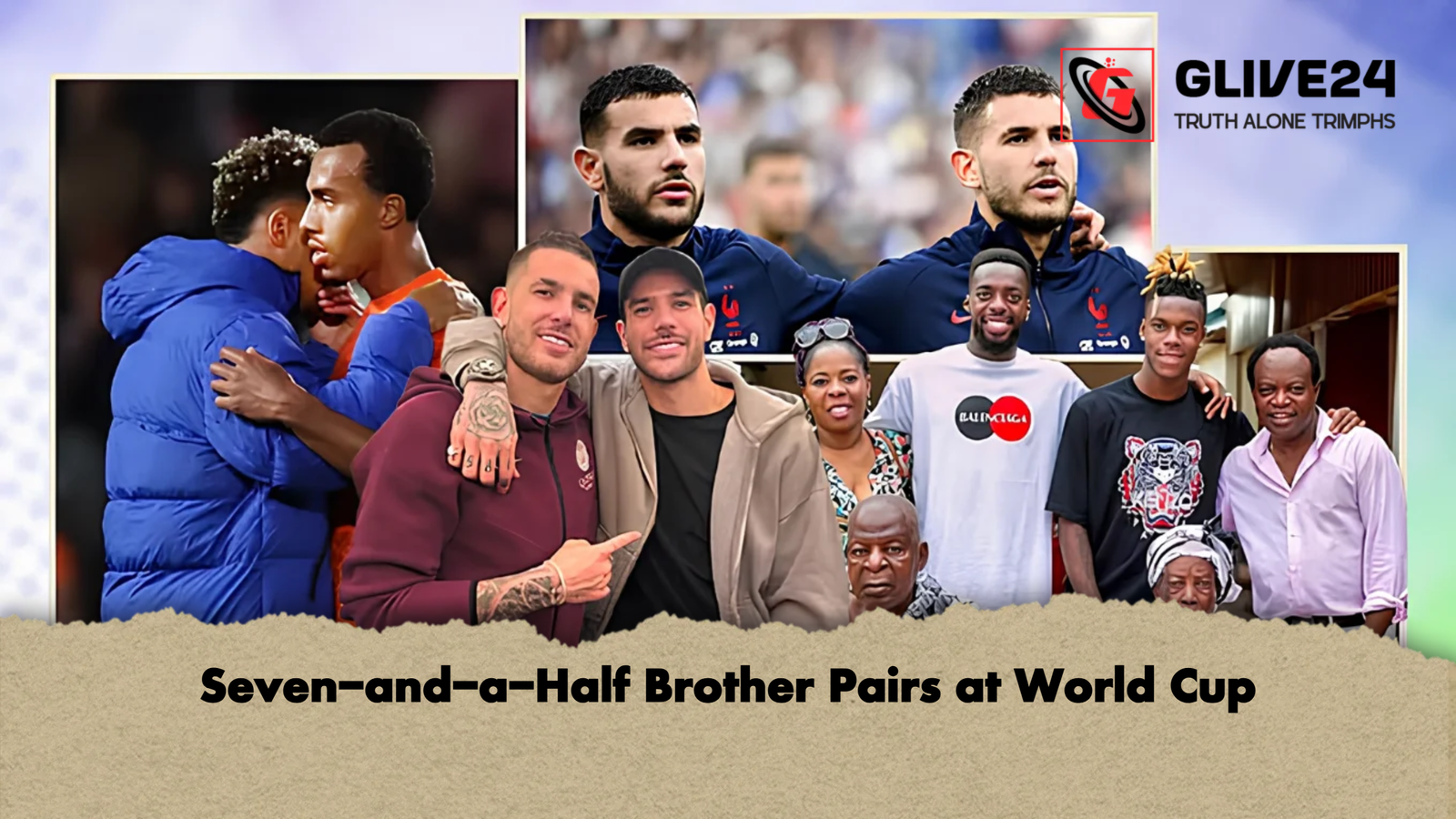
Family connections have long been part of international football, but the upcoming World Cup is set to feature an unusually large number of brothers in participating squads. While eight pairs of brothers were initially expected to be involved in the tournament, an injury has reduced that figure to what has been described as “seven-and-a-half pairs”, with one member of a brotherly duo ruled out before the competition begins.
The prospect of brothers facing one another at a World Cup is relatively rare. The most notable example remains the Boateng family. In the 2010 World Cup group stage, Germany defeated Ghana 1–0 in a match that saw brothers line up on opposite sides. Younger brother Jerome Boateng represented Germany, while his elder brother Kevin-Prince Boateng played for Ghana. The two met again at the 2014 World Cup, when Germany and Ghana drew 2–2 in the group stage.
A similar scenario could theoretically occur again in this year’s tournament, as four pairs of brothers are representing different national teams. However, according to the group-stage schedule, no brother-versus-brother encounter is possible during the opening phase of the competition.
Among the four pairs selected for the same national teams are Theo Hernández and Lucas Hernández of France. The Netherlands originally included both Jurriën Timber and Quinten Timber, but Jurriën Timber has since been ruled out through injury, reducing the total number of active brother pairs. The remaining same-team combinations are Laros Duarte and Deroy Duarte for Cape Verde, and Leandro Bacuna and Juninho Bacuna for Curaçao.
The tournament also features several families split across different national teams. Guéla Doué represents Ivory Coast, while his brother Désiré Doué plays for France. Although both were born in France, Guéla opted to represent his father’s country of origin at international level.
Another prominent example involves the Williams brothers. Born in Spain’s Basque region, the elder brother, 32-year-old Iñaki Williams, represents Ghana, the homeland of his parents. His younger brother, 23-year-old Nico Williams, plays for Spain and has become an established member of the national side.
Ghana defender Derrick Luckassen also has a brother competing internationally. His sibling, Brian Brobbey, is part of the Netherlands squad as a reserve striker. The brothers share the same mother but have different fathers.
The Souttar brothers provide another cross-national example. Harry Souttar, a central defender born in Aberdeen, Scotland, represents Australia, while his older brother John Souttar has been selected by Scotland. Their mother is Australian, and Harry later acquired Australian citizenship before committing his international future to the Socceroos.
| Brothers | National Team(s) |
|---|---|
| Theo Hernández – Lucas Hernández | France |
| Jurriën Timber – Quinten Timber | Netherlands (Jurriën ruled out injured) |
| Laros Duarte – Deroy Duarte | Cape Verde |
| Leandro Bacuna – Juninho Bacuna | Curaçao |
| Guéla Doué – Désiré Doué | Ivory Coast / France |
| Iñaki Williams – Nico Williams | Ghana / Spain |
| Derrick Luckassen – Brian Brobbey | Ghana / Netherlands |
| Harry Souttar – John Souttar | Australia / Scotland |
The World Cup is scheduled to begin on 11 June. Although no brother-against-brother clashes are possible in the group stage, one such family connection was highlighted in a recent warm-up fixture. France defeated Ivory Coast 2–1 last week, with Guéla Doué scoring in the match. Désiré Doué watched from the stands. Afterwards, Guéla remarked that the brothers had exchanged light-hearted banter before the game but remained supportive of one another.
The presence of several cross-national family pairings reflects broader demographic trends in international football. Over recent decades, migration to Europe has expanded the pool of players available to many African national teams. Countries such as Algeria, Cape Verde, DR Congo, Morocco, Senegal and Tunisia now regularly include significant numbers of European-born players of African heritage in their international squads, contributing to the growing number of families represented across different national teams at major tournaments.
Comments