Khabor Wala Desk
Published: 3rd June 2026, 11:41 AM
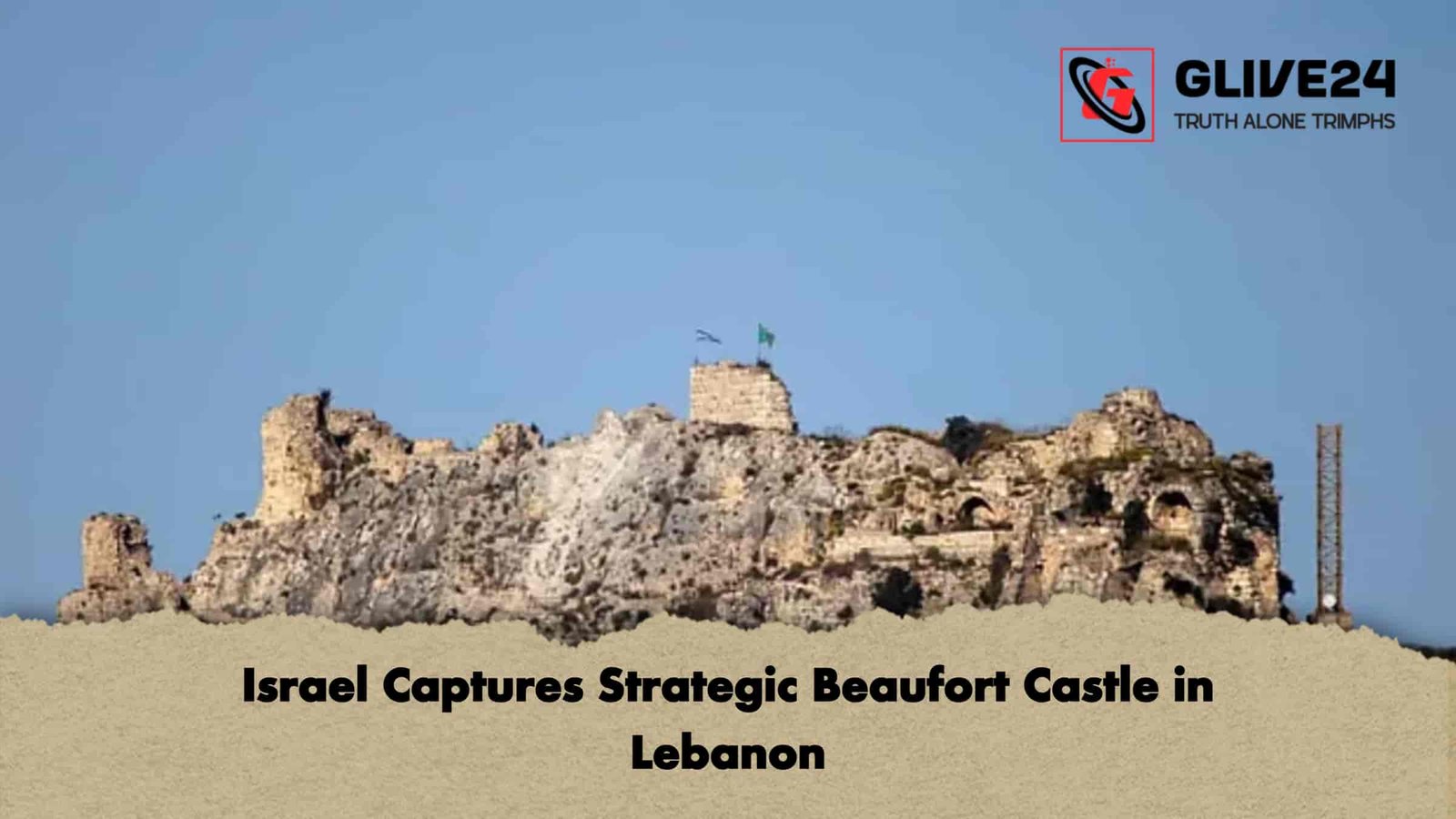
The Israeli military has seized control of Beaufort Castle, a medieval mountaintop fortress situated in southern Lebanon. The capture of this historical site occurred amid Israel’s ongoing military campaign against the Lebanese armed group, Hezbollah.
The announcement of the fortress’s capture came on Sunday, 31 May 2026, concurrent with active Israel-Lebanon ceasefire negotiations. Speaking at a memorial service dedicated to soldiers killed during the 1982 Lebanon War, Israeli Defence Minister Israel Katz confirmed the development. According to a report by The Times of Israel, Katz stated that the Israeli flag was once again flying over the high ridges overlooking communities in the Galilee region. He added that Israeli forces had secured the castle to establish it as part of an active security zone inside Lebanon.
Known in Arabic as Kalaat al-Shaqif, Beaufort Castle is a 900-year-old fortification built by Crusaders in the 12th century. The fortress sits atop a rocky crest approximately 700 metres (2,300 feet) above sea level, offering a direct view of the Litani River. The Crusaders named the structure Beaufort, which translates from Old French as “beautiful fort”.
Over the centuries, control of the fortress has changed hands repeatedly, passing from Crusader rulers to various regional powers, including the Ottoman Empire. Due to its elevated topography, the site historically evolved into one of the region’s most critical defensive outposts, granting whoever controlled it the ability to monitor vast swathes of southern Lebanon. In recent decades, the location was utilized as a base by Palestinian fighters before being captured by Israel during its 1982 invasion of Lebanon. The Israel Defence Forces (IDF) subsequently withdrew from the area in the year 2000.
| Strategic Observation Zone | Military Significance | Controlling Unit deployed |
| Nabatieh and Surrounding Villages | High-ground tactical observation over Lebanon’s fifth-largest city | IDF Golani Brigade |
| Western Beqaa Valley | Monitoring supply lines and topography to the north-east | IDF Golani Brigade |
| Occupied Golan Heights | Visual link to eastern defensive lines | IDF Golani Brigade |
| Northern Galilee | Line-of-sight security for northern Israeli towns | IDF Golani Brigade |
The capture of Beaufort Castle followed days of heavy ground combat and supporting air strikes on adjacent villages, with Israeli infantry engaging Hezbollah fighters in the rugged hills near Nabatieh. According to journalists on the ground, the position gives Israel a significant tactical advantage, allowing direct observation of Nabatieh and nearby settlements.
The broader conflict escalated significantly after 28 February 2026, when joint US and Israeli operations against Iran commenced. Since then, Israeli forces have advanced across southern Lebanon, seizing roughly 2,000 square kilometres of territory, which constitutes approximately one-fifth of the country. Hezbollah had re-entered active hostilities on 2 March 2026 by launching rocket and drone strikes against a missile defence installation near Haifa. This broke a period of relative calm that had been maintained since a previous ceasefire in November 2024.
The human cost of the campaign has risen sharply. Data from the Lebanese Ministry of Public Health indicates that since 2 March 2026, Israeli operations in the region have resulted in approximately 3,412 fatalities and 10,269 injuries. On the day Beaufort Castle was captured, Al Jazeera tracked over 36 distinct strikes across southern Lebanon, which killed at least 12 people and wounded 35 others.
Following directives from Prime Minister Benjamin Netanyahu to expand operations into former Hezbollah strongholds, the Israeli military ordered the forced evacuation of seven southern Lebanese villages: Houmine Al Fawqa, Bnaafoul, Arab Salim, Roumin, Azzi, Arki, and Jaba. Avichay Adraee, the Arabic-language spokesman for the IDF, issued a public notice via the social media platform X, instructing residents to immediately move at least 1,000 metres away from these locations in anticipation of impending air and ground assaults.


Comments