Khabor Wala Desk
Published: 4th June 2026, 6:35 PM
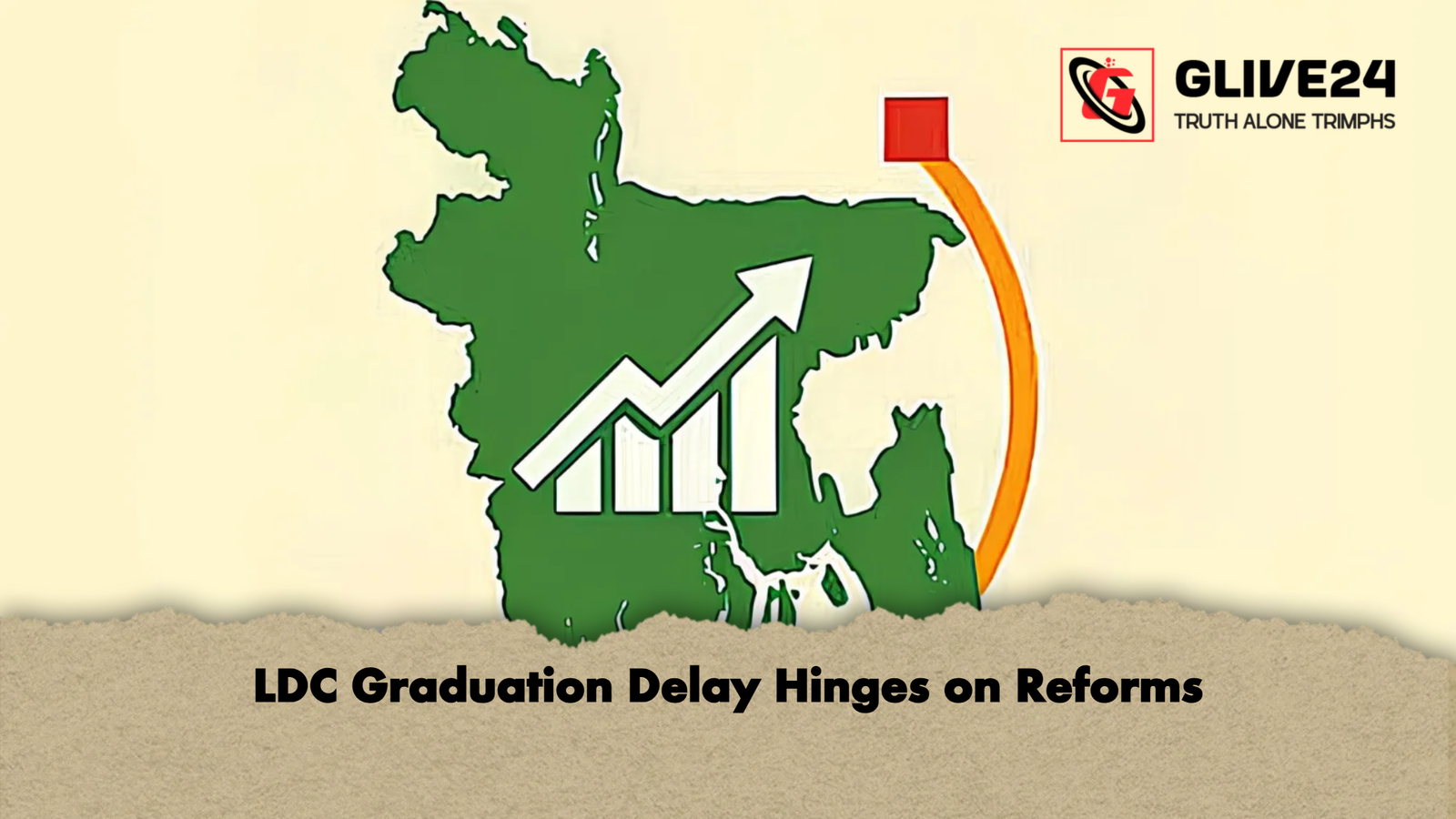
Bangladesh’s request to extend its preparation period for graduation from the United Nations list of Least Developed Countries (LDCs) is likely to be granted for a shorter duration, subject to progress on key structural reforms across economic sectors, according to the United Nations Committee for Development Policy (CDP).
The government had sought a three-year extension, proposing to defer graduation until 24 November 2029. The CDP has considered the request and indicated a preference for a shorter extension period, while emphasising reforms in financial, fiscal and broader macroeconomic areas.
Following the request, the CDP prepared a crisis assessment report on Bangladesh, which has already been published. The report addresses both the proposed postponement and the conditions attached to any extension.
Officials involved in the process indicate that the extension may be limited to one to two years. However, Bangladesh will be required to submit a detailed action plan outlining reforms and implementation mechanisms.
Table of Contents
| Item | Detail |
|---|---|
| Original graduation date | 24 November 2026 |
| Government proposal | Extension until 24 November 2029 |
| CDP position | Positive, but shorter extension preferred |
| Expected extension range | 1–2 years |
| Next key decision | United Nations General Assembly (September session) |
After eight years of assessments, the United Nations had previously set Bangladesh’s graduation date as 24 November 2026.
On 18 February, the government formally requested the CDP to extend the preparatory period by three years, citing multiple external and internal economic shocks over the past five years that reportedly hindered preparation.
Later, on 6 April, the prime minister wrote to the United Nations Secretary-General seeking support for the extension request.
The Ministry of Finance stated in a recent press release that the CDP has taken a positive position on extending the preparatory period up to 24 November 2029.
The CDP crisis assessment report states that Bangladesh has significantly exceeded all three LDC graduation criteria. It also notes that there is a very low likelihood of falling below any threshold in the near to medium term, according to international forecasts.
However, the report highlights several global and domestic risks, including geopolitical tensions in the Middle East, disruptions in global energy and supply chains, uncertainty in international trade, and long-standing structural weaknesses in the domestic economy.
The CDP further states that any approval of an extension by the United Nations General Assembly would be considered favourable if Bangladesh demonstrates measurable progress in addressing structural vulnerabilities during the extended period.
| Sector | Reform focus |
|---|---|
| Financial sector | Stability and restructuring |
| Fiscal policy | Increased domestic revenue mobilisation |
| Public spending | Prioritisation of sustainable development expenditure |
| Structural economy | Addressing long-term weaknesses |
The committee also emphasises that without substantial reform progress, an extension alone would not ensure a smooth transition. It cautions that postponement should not be used as a reason to delay reforms.
The CDP, functioning under the United Nations Economic and Social Council (ECOSOC), evaluates LDC graduation eligibility and provides recommendations to the United Nations General Assembly.
Following Bangladesh’s request, the committee held several rounds of consultations with Bangladeshi representatives and prepared a crisis assessment report in May. The report has since been forwarded to ECOSOC, which is expected to meet within the current month.
Bangladesh is required to submit a comprehensive implementation roadmap detailing its reform commitments. ECOSOC will then provide its opinion to the United Nations General Assembly, which will take the final decision.
Even if ECOSOC does not recommend an extension, Bangladesh may directly approach the General Assembly for a decision, provided it secures international support and presents sufficient justification.
An example cited in this context is Angola, which previously obtained an extension by directly appealing to the General Assembly after completing procedural stages, citing economic decline due to falling oil prices.
Following the CDP’s report and its positive stance, a high-level meeting was held involving senior government officials, including the finance minister, commerce minister, planning officials, the central bank governor, and representatives from research and business organisations.
The meeting discussed reforms across 25 areas, including financial sector reforms, fiscal restructuring, export diversification, pharmaceutical intellectual property regulations, debt risk reduction, reduction of tax exemptions, governance improvements, expansion of cashless transactions, reduction of port costs, and negotiation of free trade agreements.
A decision was taken to form a high-powered committee led by the finance minister to monitor reform implementation. This committee will review progress monthly. Ministries have been instructed to provide feedback within one week, after which a consolidated reform roadmap will be prepared for submission to ECOSOC.
According to officials, the reform report is expected to be submitted within the current month, with implementation monitored at the ministry level.
There are currently 44 Least Developed Countries worldwide. Six countries, including Bangladesh, are in various stages of preparing for graduation. Bangladesh, Laos, and Nepal are scheduled for graduation in 2026.
Since the LDC category was established in 1971, eight countries have graduated, including Bhutan, Botswana, Cabo Verde, Equatorial Guinea, Maldives, Samoa, Vanuatu, and São Tomé and Príncipe.
LDC graduation is assessed every three years based on three criteria: gross national income per capita, human assets index, and economic and environmental vulnerability index. Countries must meet at least two thresholds or exceed income requirements to qualify for graduation. Bangladesh was included in the LDC category in 1975 and has benefited from preferential trade arrangements and other support measures since then.


Comments