Khabor Wala Desk
Published: 6th May 2026, 7:20 PM
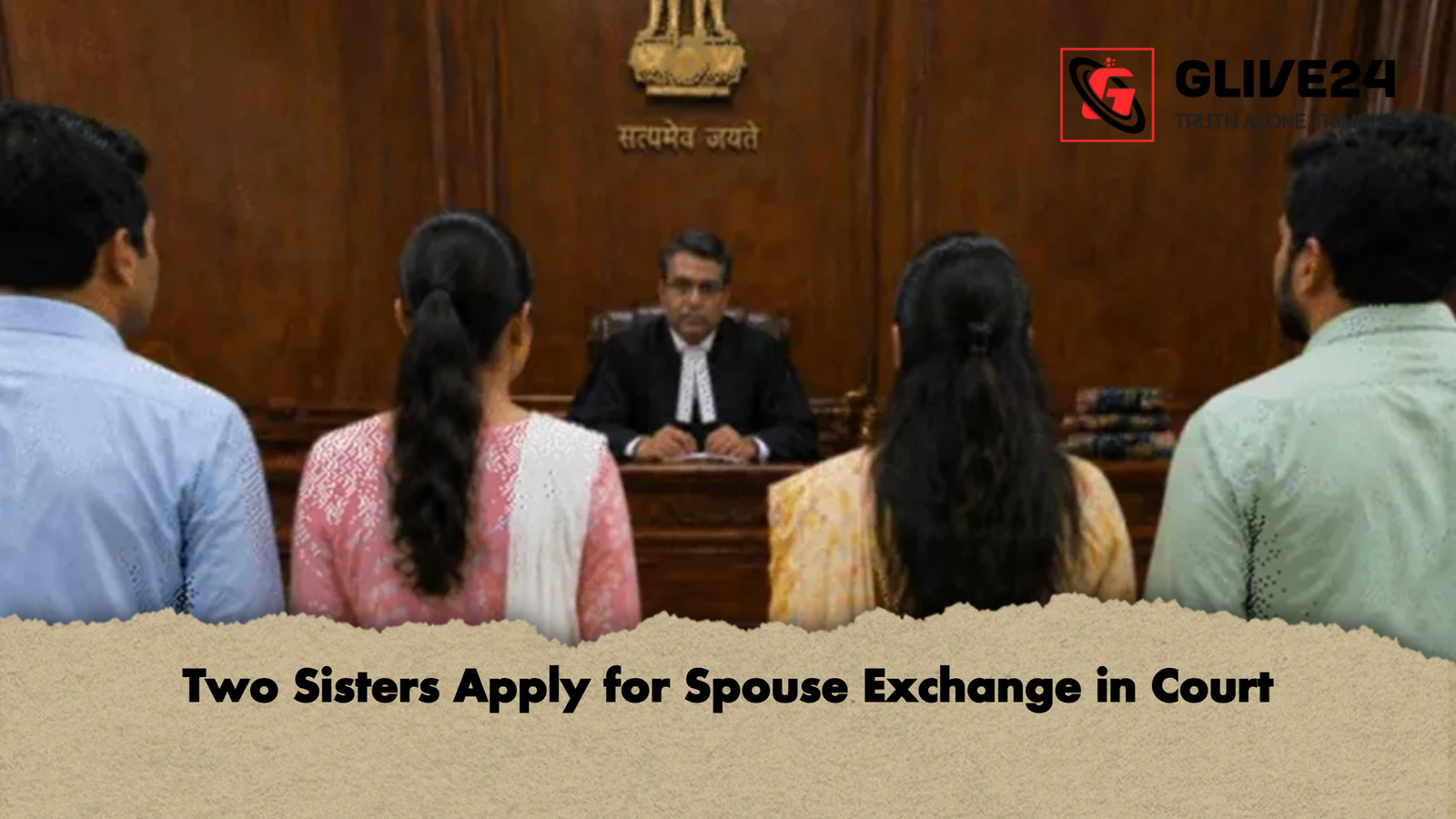
A highly unusual family matter heard at the Gwalior Bench of the Madhya Pradesh High Court in India has drawn attention due to a petition in which two sisters sought judicial permission to exchange their respective husbands. The case arose within the framework of a habeas corpus proceeding and proceeded through multiple procedural stages before being disposed of by the court.
The matter originated when a man from the district of Datia filed a habeas corpus petition before the High Court. He alleged that his wife and daughter had been abducted by his brother-in-law. Acting on the complaint, the court directed the police authorities to produce the individuals concerned before it in order to examine the circumstances of their absence and determine whether any unlawful detention had taken place.
Following compliance with the court’s directive, the individuals referred to as the “missing” persons were produced before the bench. During the hearing, the woman identified in the petition as abducted stated before the court that she had left of her own volition. She further stated that she had accompanied her sister’s husband and expressed her wish to continue living with him. She also informed the court that her relationship with her own husband was not satisfactory and that she had already initiated divorce proceedings.
In the same proceedings, the other sister also made a similar statement. She informed the court that she did not wish to remain with her own husband and instead expressed her desire to live with her sister’s husband. Both sisters subsequently submitted that they wished the court to grant permission for an exchange of husbands.
The court noted that all parties involved were adults. On the basis of the statements recorded during the hearing, the judge observed that the matter did not constitute a criminal case of abduction but rather fell within the category of a private domestic and marital dispute. The court accordingly advised that the issue be resolved through mutual agreement between the parties concerned.
Ultimately, the habeas corpus petition was dismissed by the High Court.
The sequence of events, as presented in the judicial proceedings, can be summarised as follows:
| Stage | Event | Description |
|---|---|---|
| 1 | Petition filed | A man from Datia filed a habeas corpus petition alleging abduction of his wife and daughter |
| 2 | Court directive | The High Court ordered police to produce the persons concerned |
| 3 | Appearance in court | The individuals were produced before the Gwalior Bench |
| 4 | Initial statement | One sister stated she left voluntarily with the other sister’s husband |
| 5 | Marital disclosure | She confirmed marital discord and initiation of divorce proceedings |
| 6 | Second statement | The other sister expressed a wish to live with her sister’s husband |
| 7 | Joint request | Both sisters requested permission for exchange of husbands |
| 8 | Judicial view | Court treated the matter as a domestic dispute involving consenting adults |
| 9 | Outcome | The habeas corpus petition was dismissed |
The case was therefore concluded at the High Court level with the finding that no element of unlawful detention was established, and the matter was instead categorised as a personal and familial dispute between consenting adults.
No related posts available.
Comments