Khabor Wala Desk
Published: 1st June 2026, 1:28 PM
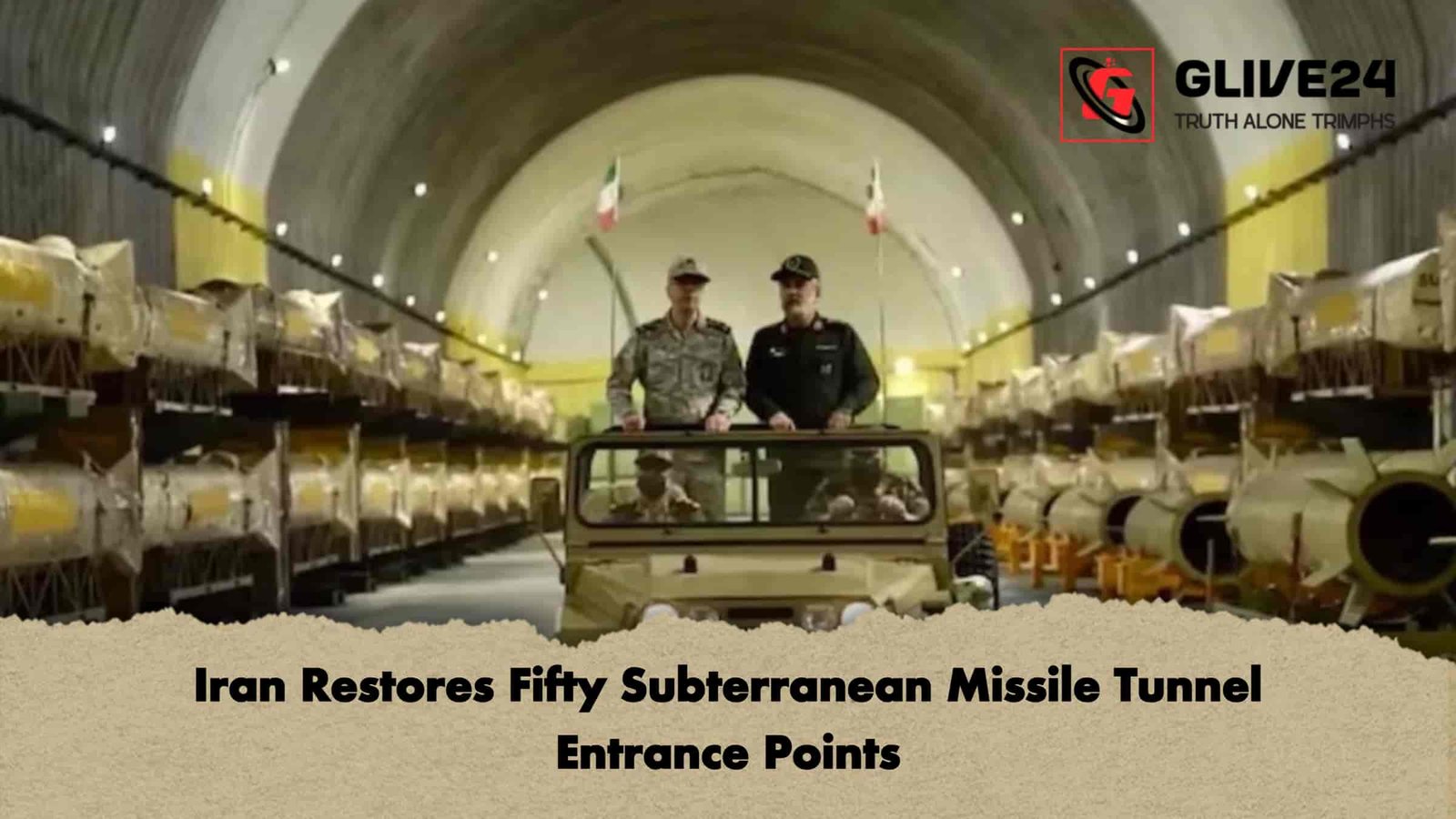
Despite sustaining intensive aerial bombardments from United States and Israeli forces, Iran has rapidly restored a substantial portion of its underground ballistic missile infrastructure. The swift remediation ensures that Tehran remains fully capable of deploying long-range ordnance across the Middle East, including targeted vectors toward Israel. Military specialists argue that the resilience of these facilities underscores the structural limitations of the current US-led strategic bombing campaign, according to a comprehensive investigation published by the American news agency CNN.
Table of Contents
An analysis of high-resolution satellite imagery conducted by CNN reveals that Iran utilised basic, low-cost engineering equipment—such as commercial bulldozers and dump trucks—to neutralise the effects of high-tech, multi-million-dollar precision missile strikes executed by allied forces. Defense experts concluded that merely targeting and collapsing the external portal points of these subterranean networks is fundamentally insufficient to permanently dismantle Iran’s defensive or offensive missile capabilities.
Sam Lair, a prominent research associate at the James Martin Center for Nonproliferation Studies, evaluated the structural integrity of the Iranian sites, stating:
“The United States military is highly proficient at securing tactical successes, and trapping the Iranian missile force beneath collapsed tunnels was a prime example of that capability. However, if a military operation lacks a realistic strategic objective or a blueprint for a durable victory, it ultimately translates into a profound strategic failure.”
Taimur Kadashev, a senior researcher at the Institute for Peace Research and Security Policy at the University of Hamburg, framed the development as an asymmetrical technological stand-off. He noted that while Western forces were required to expend highly sophisticated and financially prohibitive munitions to inflict structural damage, Iran efficiently countered those losses using standard Earth-moving machinery and low-cost construction methodologies.
Subterranean excavation and clearing operations were aggressively maintained by Iranian engineering corps even during periods of active hostility, despite allied forces occasionally targeting the construction vehicles themselves. Following the declaration of a bilateral ceasefire on 8 April 2026, these reconstruction activities escalated significantly.
The CNN investigation verified that out of 69 individual tunnel entrances spread across 18 separate subterranean missile installations that had been obstructed by US and Israeli strikes, Iran has successfully cleared and reopened 50.
| Parameter / Installation Category | Verified Metrics |
| Total Monitored Underground Missile Bases | 18 Installations |
| Total Portals Obstructed by Allied Air Strikes | 69 Tunnel Entrances |
| Portals Fully Reopened and Operational (Post-Ceasefire) | 50 Tunnel Entrances |
| Remaining Obstructed Portals Under Reconstruction | 19 Tunnel Entrances |
| Estimated Intact Subterranean Long-Range Missiles | Approximately 1,000 Units |
Satellite imagery captured in early May 2026 at a strategic military base in Isfahan—where allied forces had expended a minimum of 18 precision missiles to collapse four separate tunnel entrances—showed dump trucks actively backfilling craters and engineering crews repaving damaged access roads. Similarly, at a separate installation designated as the Khamenei base, satellite tracking from mid-April documented a minimum of 10 heavy construction vehicles working simultaneously to clear and reinforce the damaged portals.
The persistent operational readiness of the subterranean network stands in direct contrast to the explicit wartime objectives outlined by Western political leadership. US President Donald Trump had consistently designated Iran’s ballistic arsenal as a primary catalyst for conflict. In a public social media statement published in March 2026, President Trump declared that a core objective of the military campaign was “the total and complete destruction of Iran’s missile capabilities and launcher systems.”
Furthermore, US Defense Secretary Pete Hegseth asserted last month that Iran’s domestic defense manufacturing sector had been effectively dismantled, claiming that even if obsolete ordnance were extracted from the tunnels, the state lacked the capacity to manufacture new systems.
However, intelligence analysts and structural engineers counter these claims, noting that because the primary arsenals are stationed hundreds of metres beneath solid rock strata, the core stockpile remains entirely uncompromised. Current estimates indicate that at least 1,000 long-range ballistic missiles remain fully intact within the subterranean chambers. Data corroborated by the United States Intelligence Community (IC) indicates that Iran has reconstituted its domestic unmanned aerial vehicle (UAV) assembly lines and mobile missile launcher manufacturing units at a pace that far exceeds initial Western institutional projections.



Comments