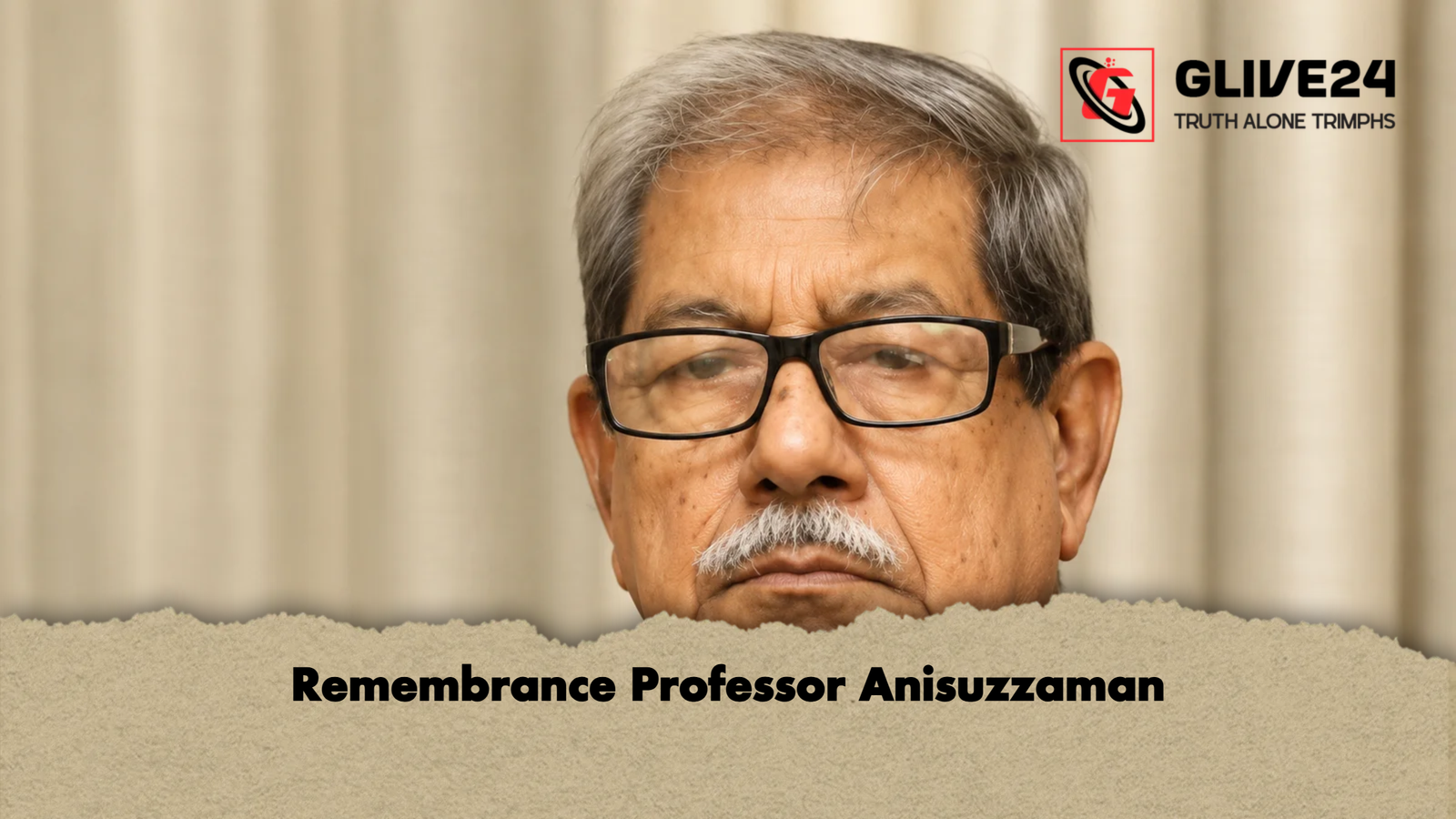
In the fields of education, literature, culture and progressive thought in Bangladesh, Professor Anisuzzaman stood as a unique guiding light. He was not merely an academic or researcher; he was a fearless voice of secular values, Bengali culture and free thinking. His wisdom, humanity and intellectual brilliance will remain forever etched in the cultural history of Bangladesh.
He was born on 18 February 1937 in Basirhat, located in the Twenty-Four Parganas district of West Bengal. Following the Partition, he moved to Dhaka with his family. From an early age, he demonstrated exceptional intelligence, intellectual curiosity and a deep love for literature. During his student years, he was inspired by the spirit of the Language Movement and later became deeply involved in the Bengali nationalist movement.
He completed his higher education in the Department of Bengali Language and Literature at the University of Dhaka and subsequently began his teaching career in the same department. Over his long academic life, he became a beloved teacher, mentor and guide to countless students. He remained actively engaged in scholarship, research and writing throughout his career until his final years.
His research on Bengali language, literature, culture and social thought was profound and authoritative. His significant contributions on medieval Bengali literature, Tagore and Nazrul studies, the Language Movement, the cultural evolution of the Bengali people and the history of the Liberation War greatly enriched the literary heritage of Bengal. Among his notable works are Muslim Manas O Bangla Sahitya, Swarooper Sondhane, Kal Nirobodhi, Bipula Prithibi and Amar Ekattor. In particular, Amar Ekattor is regarded as a valuable testimony of his experiences during the Liberation War.
He played an active role in the Language Movement of 1952, the mass uprising of 1969 and the Great Liberation War of 1971. During the Liberation War, he made significant contributions to the planning and intellectual activities of the Provisional Government of Bangladesh. Even after independence, he remained firmly committed to democracy, secularism and the ideals of the Liberation War.
In recognition of his outstanding contributions, he received numerous honours and awards, including the Bangla Academy Award, Ekushey Padak, Ananda Award and Independence Award, both at home and abroad. In 1985, he was awarded the Bangla Academy Literary Award, and later he was honoured as a National Professor—one of the highest academic distinctions in Bangladesh.
Professor Anisuzzaman was a humble, refined and profoundly humane individual. He believed that the pursuit of knowledge was not only for personal achievement but also essential for enlightening society. His writings and speeches consistently reflected a call for humanity, rationality and progress.
He passed away on 14 May 2020 at the Combined Military Hospital in the capital city. With his death, Bangladesh lost a distinguished teacher, eminent researcher and one of the foremost guardians of free thought.
We remember with deep respect this remarkable beacon of Bengali language, literature and social consciousness.
> Student Wing Leader Removed Over Alleged Affair
> 431 Arrested, 70 Cases Filed Across Dhaka in 24 Hours
> Dhaka University Hall Leader’s Room Controversy Sparks Investigation
> Dhaka Plans Water Bus Revival Along Circular River Route
> No Specific Intelligence on Police Vehicle Attacks, Says DMP
> Narsingdi Man Shot Dead in Home Amid Long-Running Dispute
> Human chain and submission of memorandum in Pabna
> Dengue Death Toll Reaches 56 as 423 More Hospitalised
> LPG Prices Rise Again as 12kg Cylinder Set at Tk1,598
> Six Names Emerge in Race to Succeed FIFA President Infantino
> Iran launches new strikes against Kurdish groups in Iraq
> Wife Arrested After Severing Sleeping Husband’s Genitals
> Two Arrested With Tapentadol
> ‘Broiler Chicken Party’ Emerges Amid Student Protests
> Fakhar Zaman Receives Two-Match Ban for Tampering
> Club Goal Rankings in World Cup History
> Bangladesh emerge unbeaten champions
> Neymar Sparks 2030 World Cup Speculation After Brazil Exit
> The Psychology and Philosophy of Unwarranted Defamation
> Russia Claims Severodonetsk Advance as Global Economy Shudders
সম্পাদক ও প্রকাশক: এ বি এম জাকিরুল হক টিটন
যোগাযোগের ঠিকানাঃ পশ্চিম কাফরুল, বেগম রোকেয়া সরণি, ঢাকা
© Copyright 2026 Khaborwala। All Rights Reserved


Comments