Khabor Wala Desk
Published: 20th May 2026, 4:23 PM
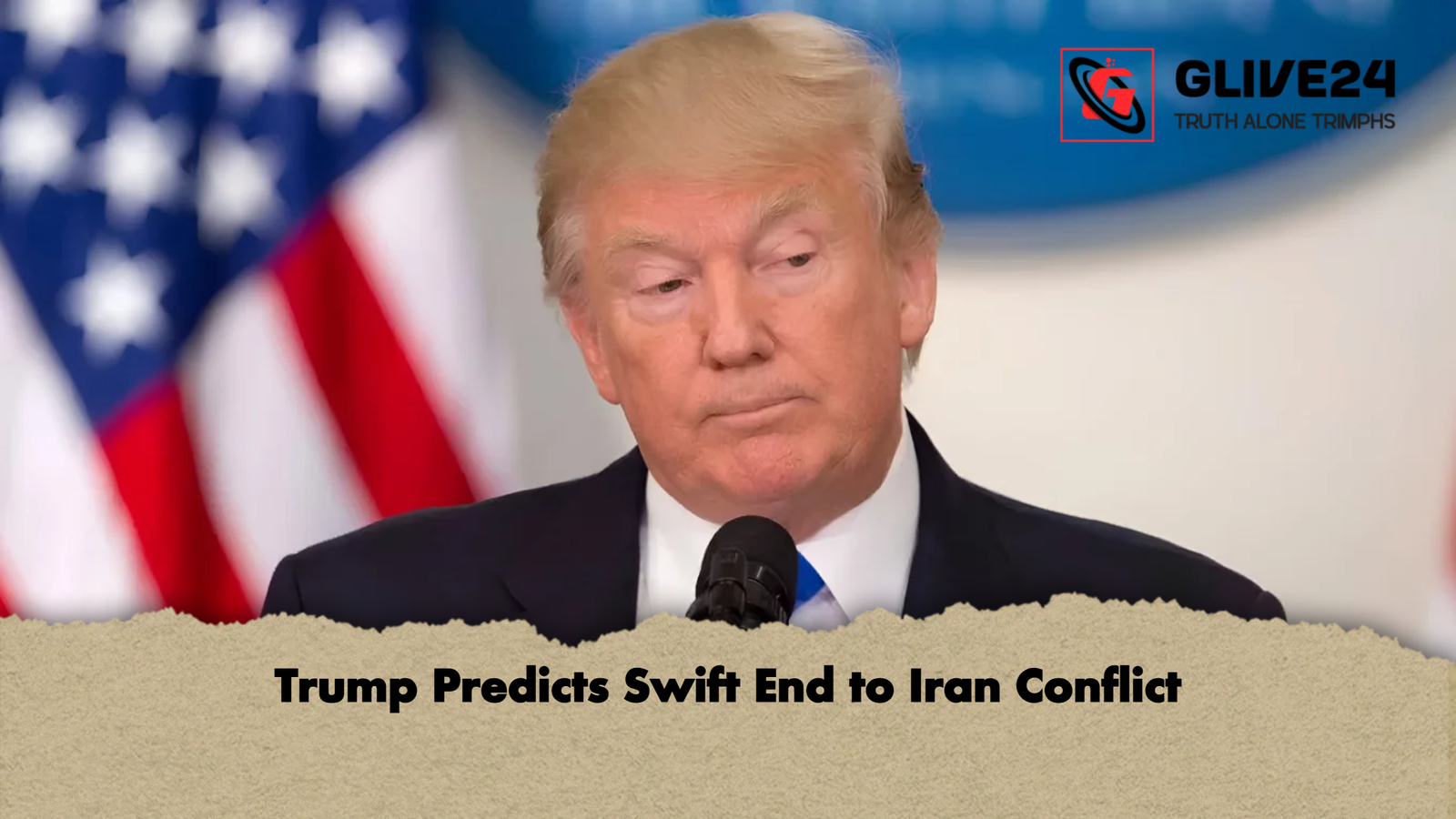
US President Donald Trump has stated that the ongoing confrontation between the United States and Iran will reach a conclusion in the near future. Speaking before an audience of lawmakers at a White House event, the American President asserted that the administration would bring the hostilities to a rapid termination.
During his address, President Trump claimed that Tehran is actively seeking to negotiate an accord with Washington, describing the Iranian government as exhausted by the protracted stand-off. “They [Iran] desperately want to make a deal; they are tired,” Trump remarked, suggesting that economic and geopolitical pressures have severely impacted the Islamic Republic’s resolve.
Reiterating his administration’s uncompromising stance regarding Iran’s nuclear ambitions, the President emphasised that the United States would block any attempt by Tehran to obtain weaponised nuclear capabilities. “They have nuclear weapons on their mind, but we are not going to let them have nuclear weapons,” Trump stated. He expressed confidence in the strategy implemented by his administration, adding, “We’ve done a great job. I think we’re going to have a very fast ending to it. They won’t have nuclear weapons, and hopefully, we’re going to do it very nicely.”
The President’s optimistic pronouncements coincide with significant legislative manoeuvres on Capitol Hill aimed at curbing presidential military authority. On Tuesday, the Republican-controlled Senate voted to advance a War Powers Resolution. This legislative measure seeks to restrain the US President from engaging in prolonged military action against Iran without obtaining explicit, prior authorisation from the United States Congress.
The advancing of this resolution underscores a notable institutional tension between the executive and legislative branches regarding foreign policy and deployment powers. Below is an overview of the key components shaping the current political framework:
| Key Element | Official Status and Details |
| Executive Declaration | The administration projects a rapid conclusion to hostilities, asserting Iran is eager to negotiate. |
| Nuclear Policy Objective | A strict prohibition remains on Iran acquiring or manufacturing nuclear weaponry. |
| Legislative Countermeasure | The US Senate advanced a War Powers Resolution to limit unilateral executive military action. |
| Political Alignment | The resolution secured advancement in the Senate despite the chamber being controlled by the President’s own Republican party. |
The confrontation remains rooted in deep-seated disputes over the 2015 Joint Comprehensive Plan of Action (JCPOA)—commonly referred to as the Iran nuclear deal—from which the Trump administration unilaterally withdrew, subsequently reimposing stringent economic sanctions. The White House maintains that its “maximum pressure” campaign is the primary mechanism driving Iran towards a new agreement. Conversely, the legislative push behind the War Powers Resolution indicates a growing desire within Congress to ensure constitutional oversight and prevent an escalation into an unauthorised regional war.
No related posts available.
Comments