Khabor Wala Desk
Published: 7th June 2026, 1:03 AM
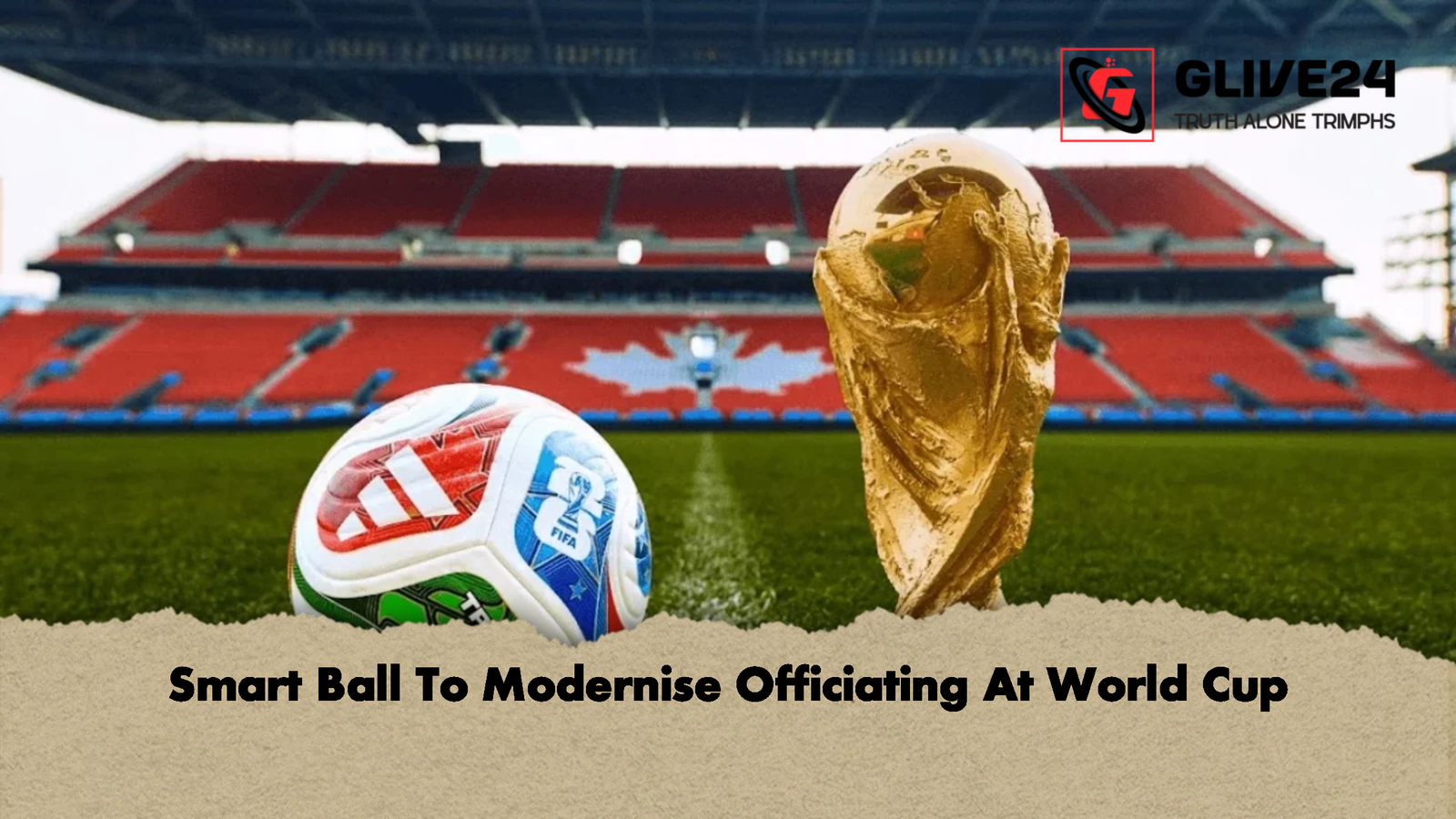
The upcoming FIFA World Cup, hosted across the United States, Mexico, and Canada, is set to establish a significant historical precedent as the first edition of the tournament to feature 48 participating national teams. Beyond the expanded competitive format, the global showpiece is poised to achieve a distinct milestone in football history due to its integration of advanced technological innovations. The official match ball for the tournament, manufactured by German sportswear company Adidas and named the “Adidas Trionda”, will feature battery-powered smart ball technology designed to improve the accuracy of the Video Assistant Referee (VAR) system.
Table of Contents
The primary technological innovation within the Adidas Trionda is a highly advanced 500 Hz connected-ball motion sensor situated at the absolute centre of the ball. This internal microchip technology is capable of tracking and transmitting real-time data regarding every individual touch, velocity, trajectory, and spatial movement at a rate of 500 times per second.
The high-frequency motion sensor automatically relays this biometric tracking data directly to the VAR operating room, establishing an instantaneous link between the physical movement of the ball and the digital officiating tracking systems. This automated data stream is explicitly designed to assist match officials in making faster, more precise, and definitive decisions regarding complex and controversial match incidents. Specifically, the real-time telemetry will be utilised by the refereeing infrastructure to determine marginal offside positions, potential handball infractions, and clear boundary line crossings, thereby minimising human error and reducing prolonged review delays during live matches.
To maintain the continuous operational functionality of the internal 500 Hz tracking sensor, the match balls require systematic electrical charging prior to competitive use. Adidas has developed specialised inductive charging stations where the official tournament balls are placed to receive a full electrical charge ahead of each fixture.
According to official technical specifications released by the manufacturer, a fully charged internal battery guarantees up to six hours of continuous active power and tracking transmission during live match play. To optimise power consumption and prevent unnecessary battery depletion, Adidas has integrated an automated power management system into the internal architecture.
Whenever the ball is out of play or placed outside the perimeter of the active pitch, the internal motion sensor immediately transitions into an automated “hibernation mode” (inactive state). This power-saving protocol drastically extends the overall battery life of the internal sensor, allowing the electrical charge to remain viable and preserved across several days of storage without requiring immediate recharging.
In addition to its internal technological infrastructure, the physical design and aesthetic composition of the Adidas Trionda carry deep symbolic references to the three co-hosting North American nations. The exterior graphics of the ball utilise a distinct colour palette comprising red, green, and blue.
Woven into the geometric patterns of the outer casing are specific national symbols: the mapple leaf representing Canada, the traditional eagle representing Mexico, and the iconic stars representing the United States. The naming convention of the ball is directly derived from its core structural philosophy. The term “Trionda” translates conceptually to “Three Waves”, a title chosen by the design team to mirror the tri-nation partnership and the fluid movement of the game across the three host nations.
The commercial launch of the World Cup ball has generated significant consumer interest within global sporting goods markets. Adidas has announced that the Trionda will be made available to the public in four distinct retail configurations tailored to different levels of play: Pro, Competition, League, and Club.
| Retail Edition | Target Market & Features | Price Range (USD) |
| Pro | Official Match Ball (FIFA Quality Pro, Full Sensor Technology) | $150 – $170 |
| Competition | Premium Match Ball (High-level amateur & semi-pro play) | $65 – $149 |
| League | Intermediate Tier (Standard training & recreational use) | $40 – $60 |
| Club | Entry Level (Casual recreational play & basic training) | $25 – $39 |
The elite “Pro” edition serves as the exact replica of the official match ball utilised by the international players throughout the tournament. This top-tier version is equipped with the identical integrated sensor technology found in the tournament balls and carries the official “FIFA Quality Pro” certification, which mandates rigorous testing for weight, water absorption, shape retention, and circumference.
To ensure accessibility for general football enthusiasts and casual consumers who do not require the internal electronic tracking components, the manufacturer has priced the standard “League” and “Club” iterations between $25 and $60, depending on the specific retail country and regional distributor. The complete rollout across global retail channels is scheduled to align with the pre-tournament promotional phase.



Comments