Khabor Wala Desk
Published: 2nd June 2026, 4:45 PM
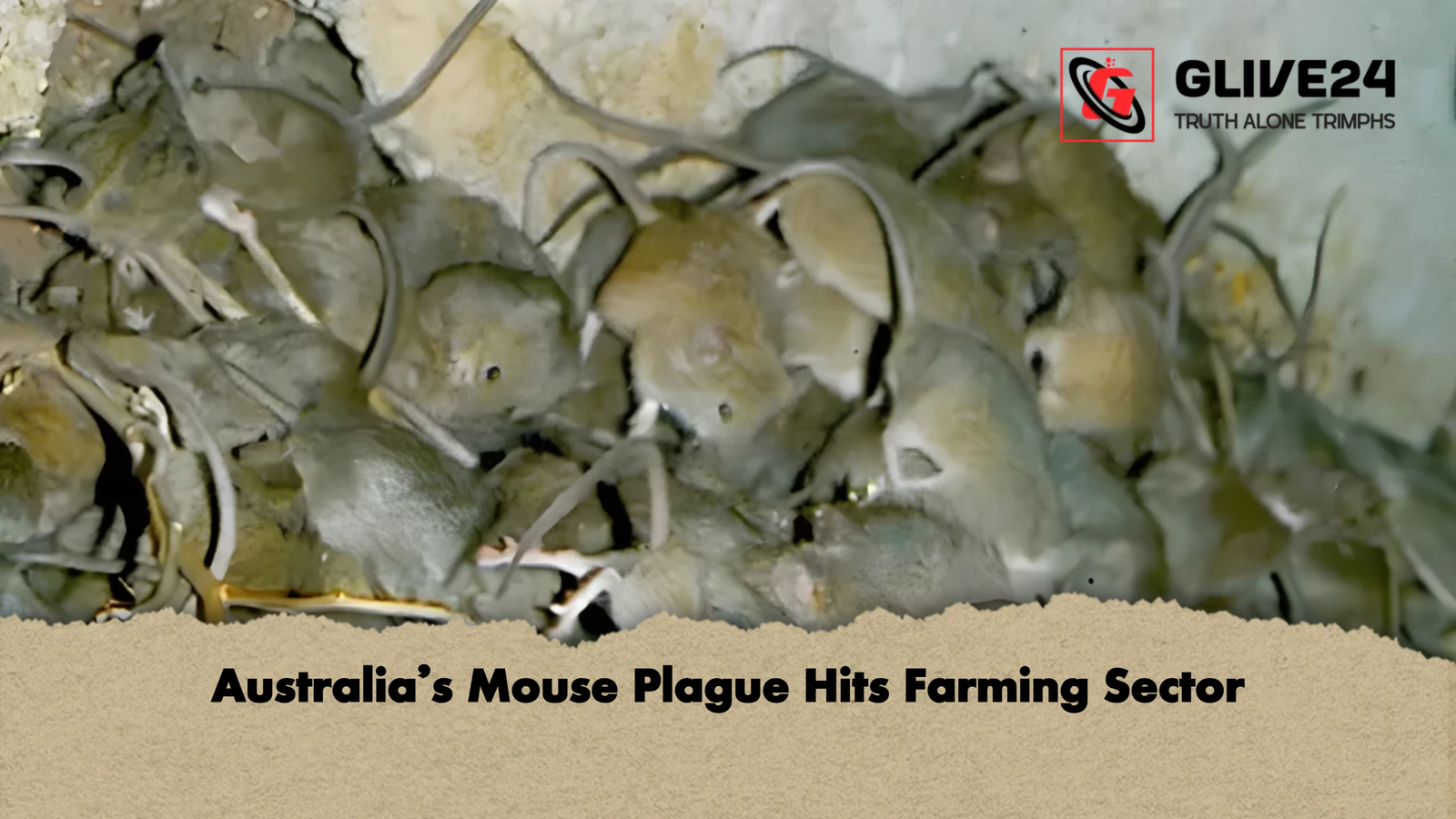
Across extensive agricultural regions of Australia, a severe outbreak of mice has reached epidemic proportions, leaving farmers significantly affected. The rodents are moving around homes and causing widespread destruction in large-scale crop fields. Farmers have already incurred costs amounting to hundreds of thousands of dollars as a result of this crisis. In many cases, damaged crops are being replanted, or “sterilised seed” treated with poison is being sown after planting to control the infestation.
Geoff Cosgrove, 43, manages a 14,000-hectare farm in Minnigeup, Western Australia. He cultivates wheat, canola, lupins and barley. He stated that the financial burden extends beyond the cost of poison itself, describing additional and significant expenses associated with the infestation. He also said that the mouse problem is psychologically distressing.
“They move overhead, through the air-conditioning units at night. You can hear them, you can smell them—it’s like a rotten corpse.”
Cosgrove, who has been farming for 25 years, believes the current situation is more severe than the 2021 mouse plague.
In 2021, a widespread mouse infestation affected large parts of Australia, causing severe damage across New South Wales and Queensland. The situation was so serious that hundreds of prisoners had to be relocated in New South Wales after mice caused extensive damage inside correctional facilities.
The current outbreak began in March in Western Australia, where mouse numbers increased sharply, before spreading to South Australia.
Approximately two hours from Cosgrove’s farm, Belinda Estaff, a farmer and agricultural expert, works on a 5,500-hectare property. She stated that the present situation is even worse than the mouse plague experienced in Western Australia around five years ago.
“In 2021 they were in my handbag. They were everywhere—on the floor, the walls, the food cupboards. But they are not there this time. Because they are now closer to the food source. That is in the fields.”
She explained that record crop production last year left significant amounts of grain scattered across fields, providing an abundant food supply for mice. Subsequent summer rainfall also allowed fresh vegetation to grow, further increasing food availability.
“It was like they had meat and salad—they were in heaven.”
Estaff, who has farmed for around 40 years, grows wheat, canola and lupins. Her wheat is exported to Southeast Asia for udon noodle production and is also used domestically for biscuits, bread, and pasta.
She estimates that her canola fields contain around 8,000 to 10,000 mice per hectare.
She added: “Sometimes during a plague when food runs out, the mouse population decreases. But this time it has not. I am in a nightmare.”
Autumn is a crucial period for grain growers, as it is the main sowing season. As an agricultural adviser, Estaff recommends that farmers apply poison immediately after sowing.
“If poison is not applied quickly after sowing, mice come at night and eat the seeds. If you finish sowing at 8 pm, by morning you may find the crop rows are gone.”
She also noted that farmers are under increasing pressure due to rising fuel and fertiliser costs, which have increased further following the outbreak of war in Iran.
“Now we are paying double for fuel compared to two or three months ago. On top of that, the mouse problem is another major headache.”
Steve Henry, a researcher at Australia’s national science agency CSIRO and a specialist in rodent control, said that a density of around 800 mice per hectare is typically considered an outbreak threshold. However, in Western Australia, numbers are now in the thousands per hectare.
During a recent visit to Western Australia, he observed 30 to 40 active burrows within just 100 metres of walking. This suggests an estimated 3,000 to 4,000 burrows per hectare. Similar conditions have also been reported in South Australia.
| Indicator | Previous outbreak (2021) | Current situation |
|---|---|---|
| Main regions affected | New South Wales, Queensland | Western Australia, South Australia |
| Severity | Major national damage | Widespread epidemic conditions |
| Estimated density | Epidemic threshold reached | Thousands per hectare in some areas |
| Field impact | Crop and infrastructure damage | Crop destruction, seed loss |
| Contributing factors | Seasonal conditions | High crop residue and rainfall |
The data from farmers and researchers highlights an escalating rodent infestation affecting major grain-producing regions, with significant agricultural disruption and financial pressure reported across affected farms.



Comments