Khabor Wala Desk
Published: 1st June 2026, 2:15 PM
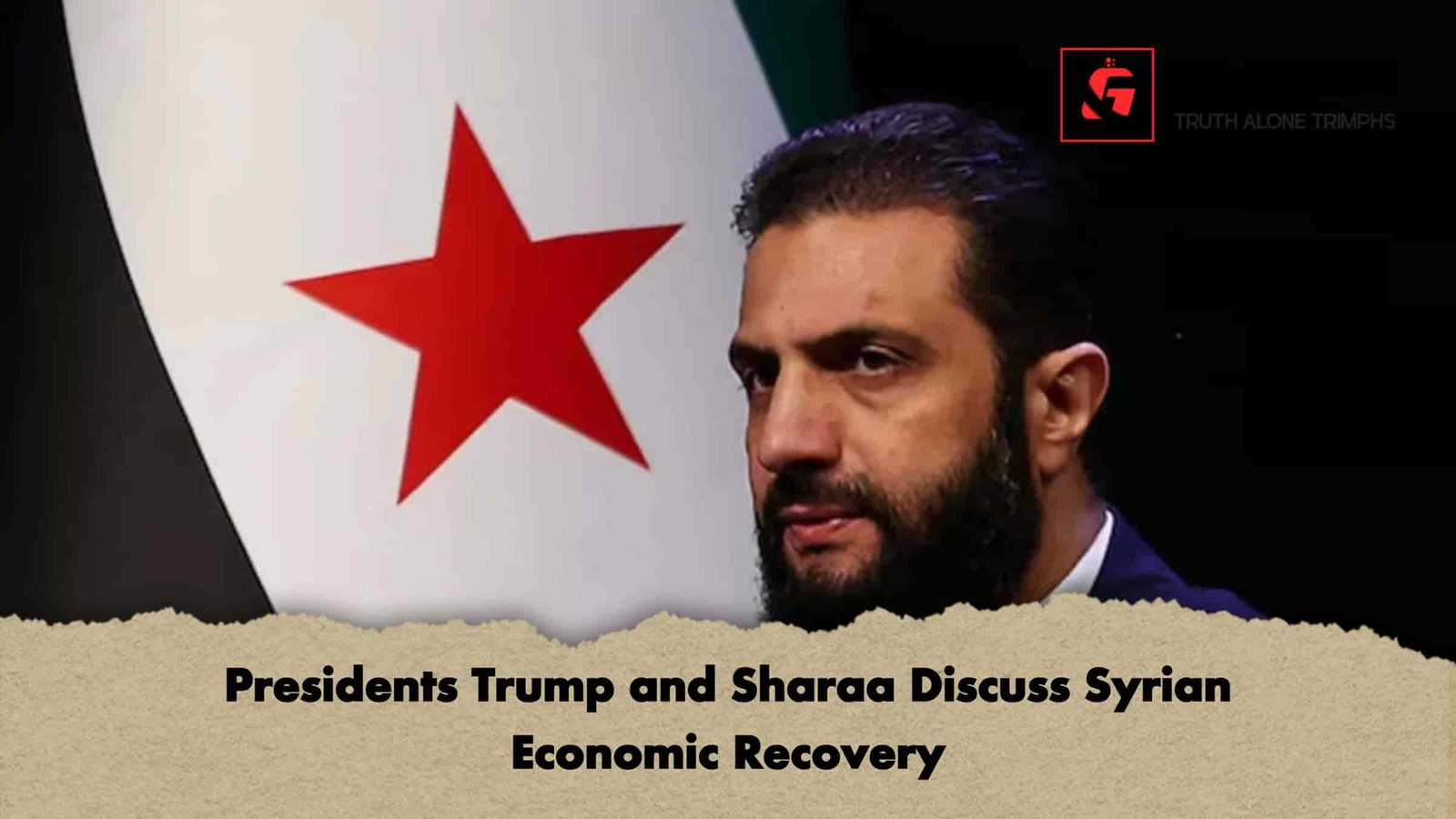
Syrian President Ahmed al-Sharaa held a high-level telephone conversation with United States President Donald Trump on Sunday, 31 May 2026. According to an official press release issued by the Syrian presidency, the bilateral dialogue focused primarily on methods to reinforce the Syrian economy and addressed the latest geopolitical dynamics unfolding across the Middle East.
Table of Contents
Following the conversation, President Trump offered a positive assessment of the interaction, characterising the high-profile discussion as having gone “well”. The US President further noted that conditions within Syria and the broader Middle East are currently “moving along well”.
Conversely, President Ahmed al-Sharaa used the opportunity to emphasize that the absolute lifting of all remaining American economic sanctions remains an indispensable prerequisite for his country. The Syrian leader stated that full sanctions relief is essential to revive the domestic economy, rebuild dilapidated infrastructure, and attract vital foreign direct investment (FDI) into the nation.
The United States administration has clarified that a vast majority of its historical economic restrictions on Syria have already been dismantled, which includes the formal repeal of the Caesar Act. The Caesar Act had previously imposed sweeping and severe punitive financial measures against individuals, commercial entities, and state institutions explicitly linked to the deposed administration of former President Bashar al-Assad.
Despite these legislative rollbacks, Washington maintains a targeted sanctions regime. United States officials affirmed that specific restrictions will remain active against targeted groups:
Former President Bashar al-Assad and his close political associates.
Individuals and entities verified to have committed significant human rights abuses.
Networks involved in the manufacturing and transnational trafficking of Captagon, a highly addictive stimulant.
Rogue actors accused of actively destabilising the security framework of the region.
Concurrently, Washington disclosed that it is conducting an official administrative review regarding Syria’s designation as a State Sponsor of Terrorism. This specific classification legally mandates severe restrictions on the provision of US foreign assistance, enforces strict prohibitions on defence exports, and curtails an array of international financial transactions.
The complete elimination of these residual measures is widely regarded by analysts as the linchpin for the long-term viability and success of Damascus’s transition government.
| Regulatory Element / Policy Area | Current Operational Status | Strategic Impact on Syria |
| The Caesar Act Regime | Formally Repealed | Dismantled broad embargoes on companies tied to the old regime. |
| State Sponsor of Terrorism | Under Active Review by Washington | Bars US foreign aid, defence sales, and restricts standard banking. |
| Targeted Sanctions | Active and Enforced | Targets Captagon traffickers, human rights abusers, and Assad loyalists. |
| Saudi Arabian Investment | Multi-Billion Dollar Proposals | Projected to flow into domestic industrial sectors upon sanctions relief. |
| Gulf Cooperation Council | Financial Aid Pledges Secured | Contingent on international financial reintegration and stabilization. |
To accelerate economic reconstruction, several prominent Saudi Arabian firms, backed by initiatives from Riyadh, are currently mapping out multi-billion-dollar investment portfolios aimed directly at restoring Syria’s industrial capacity. Furthermore, various other Gulf states have formally pledged substantial financial assistance packages to guarantee the stabilization of the country.

Comments