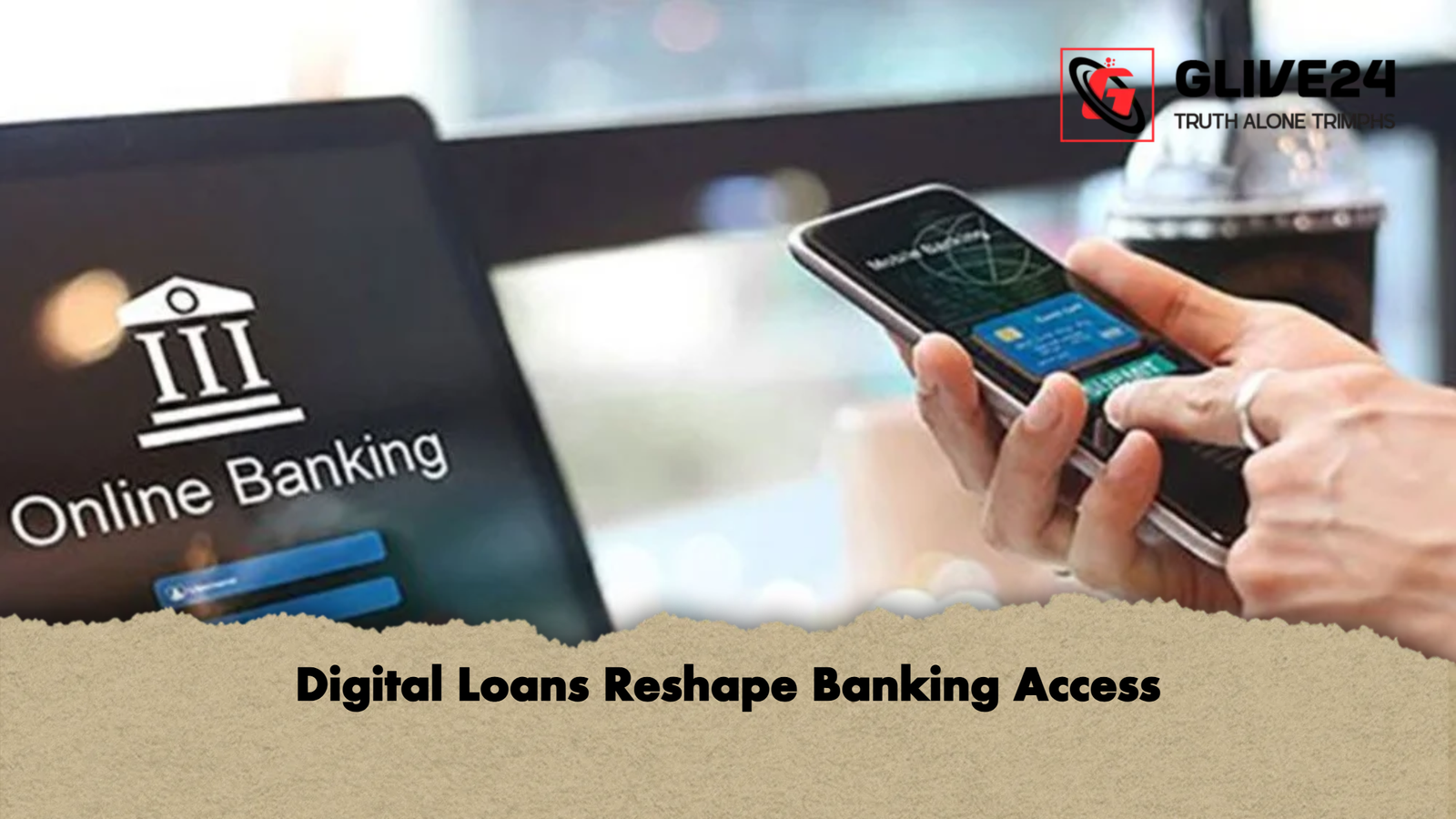
The traditional experience of applying for a bank loan—long queues, extensive paperwork, and repeated visits to branches—is rapidly being replaced by a more streamlined digital process. In Bangladesh, this transformation is being driven by the emergence of “e-loans”, a fully digital lending system that allows customers to apply for, receive, and repay loans without physically visiting a bank.
An e-loan refers to a credit facility in which the entire lifecycle—from application to approval and disbursement—is completed online through a bank’s mobile application, website, or digital platform. Instead of manual documentation, financial institutions rely on digital footprints such as transaction history, income records, and credit behaviour to assess eligibility.
According to the central banking authority, this system has been formalised under recent regulatory guidance issued under the Bank Company Act, 1991. The move aims to expand financial inclusion and accelerate the transition towards a cashless economy, particularly by integrating underserved populations into formal banking services.
Table of Contents
Although the regulatory framework is new, digital lending itself is not unfamiliar in Bangladesh. Mobile financial service providers such as bKash have already been offering small-scale digital credit in partnership with banks like The City Bank Limited. Industry experts, including representatives from the Bangladesh Association of Software and Information Services (BASIS), describe the latest development as an expansion of an existing model rather than a completely new innovation.
Under the revised framework issued by Bangladesh Bank, any scheduled bank is now permitted to offer e-loans, standardising what was previously a limited set of partnerships.
| Feature | Details |
|---|---|
| Loan type | Digital unsecured personal loan |
| Maximum amount | Up to BDT 50,000 |
| Tenure | Up to 12 months |
| Application process | Fully online via app/web platform |
| Documentation | Digital verification only (no physical paperwork) |
| Interest rate | Market-based, capped at 9% if refinance facility applies |
| Eligibility check | Credit Information Bureau (CIB) screening required |
| Default restriction | Defaulters ineligible for new e-loans |
Applicants submit their information digitally, after which banks evaluate creditworthiness using automated systems. Approval and disbursement are completed electronically, with customer consent secured through biometric authentication and two-factor verification rather than physical signatures.
Before approval, banks are required to review the borrower’s credit history through the Credit Information Bureau. Notably, no additional charges apply for CIB verification under the e-loan scheme.
Experts believe the most significant advantage of e-loans lies in accessibility. Unlike traditional credit cards or SME loans, which often require extensive documentation or formal employment proof, e-loans can be accessed by individuals with basic bank accounts. This includes small entrepreneurs, students, and informal sector workers.
The system also reduces reliance on microcredit institutions, where weekly repayment schedules often increase financial pressure. Instead, borrowers can repay within a flexible 12-month period, potentially lowering monthly burden.
Despite its advantages, industry specialists highlight several risks. The absence of collateral makes these loans inherently riskier for banks. If repayment rates are low, financial institutions may face significant losses.
There are also concerns regarding interest rate ceilings. Some experts argue that a fixed cap may discourage banks from actively participating, especially given the operational cost of managing small-ticket unsecured loans.
In global markets, similar digital lending products often carry higher interest rates to offset default risk and administrative expenses. However, regulators in Bangladesh appear to be balancing affordability for consumers with cautious risk management for lenders.
The introduction of e-loans marks a significant step towards digital transformation in Bangladesh’s financial sector. While challenges remain in terms of risk control and pricing flexibility, the model is widely seen as a strategic move towards broader financial inclusion and a more digitally driven banking ecosystem.
> Waning Passion: Datafolha Survey Highlights Growing Indifference to Football in Brazil
> Experienced German Coach Peter Gerhard Hails Jimmy as ‘Bangladesh’s Messi’
> Small Loan Defaults Surge in Bangladesh as Over 2.4 Million Borrowers Join List in a Year
> Promising Early Results Reported for Russia’s Pioneer mRNA Melanoma Vaccine
> Tragic Incident at Chuadanga Station as Young Mother Leaps Before Oncoming Train
> Political Tension Mounts as BNP Bans NCP Chief Coordinator in Narayanganj
> Naogaon Police Arrest 32-Year-Old Man Following Alleged Sexual Assault of Minor
> Dhaka University Mourns Loss of Distinguished Academic Professor Deepti Saha
> Overstretched US Forces Face Choice Between Protecting Israel and Mainland Defence
> Police Step In as Rival BNP and Jamaat Rallies Trigger Standoff in Narayanganj
> Iran launches new strikes against Kurdish groups in Iraq
> Wife Arrested After Severing Sleeping Husband’s Genitals
> Two Arrested With Tapentadol
> ‘Broiler Chicken Party’ Emerges Amid Student Protests
> Fakhar Zaman Receives Two-Match Ban for Tampering
> Club Goal Rankings in World Cup History
> Bangladesh emerge unbeaten champions
> Neymar Sparks 2030 World Cup Speculation After Brazil Exit
> The Psychology and Philosophy of Unwarranted Defamation
> Russia Claims Severodonetsk Advance as Global Economy Shudders
সম্পাদক ও প্রকাশক: এ বি এম জাকিরুল হক টিটন
যোগাযোগের ঠিকানাঃ পশ্চিম কাফরুল, বেগম রোকেয়া সরণি, ঢাকা
© Copyright 2026 Khaborwala। All Rights Reserved



Comments